Edna Ferber
Edit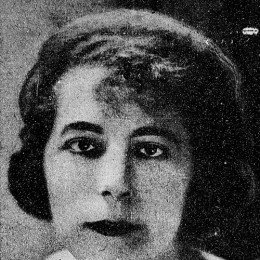 Enlarge Image
Edna Ferber was an American novelist, short-story writer and playwright whose books often centered on ambitious women, work and changing American communities. She won the 1925 Pulitzer Prize for So Big. Her other novels include Show Boat, Cimarron and Giant, while her Broadway career included collaborations with George S. Kaufman.
Explore Related Biographies
Selected for this profile


People Mentioned in This Biography
Early life and newspaper work
Ferber was born in Kalamazoo, Michigan, and grew up in the Midwest, eventually settling with her family in Appleton, Wisconsin. The University of Wisconsin's Wisconsin Women Making History biography describes the antisemitism her Jewish family encountered and her early interest in performing and writing.
She worked on her high-school newspaper and hoped to study theatre, but financial pressures led her into paid journalism. Still a teenager, she became a reporter for the Appleton Daily Crescent and later worked for the Milwaukee Journal. Reporting trained her to observe occupations, social distinctions and the practical details of daily life that would enter her fiction.
Short stories and the first novels
Her first novel, Dawn O'Hara, appeared in 1911 and followed a woman working as a newspaper reporter. Ferber also found a broad magazine audience through stories about Emma McChesney, a traveling saleswoman and single mother. The Michigan Women's Hall of Fame describes the character's business success as central to those stories' appeal.
These early works established interests that continued throughout her career. Women in Ferber's fiction could be workers, managers and decision-makers, confronting economic pressures as well as personal relationships. Her stories drew on places and occupations she had encountered through reporting and travel.
So Big and the Pulitzer Prize
So Big was published in 1924 and received the 1925 Pulitzer Prize in the Novel category.
The novel follows Selina Peake DeJong, a widowed farmer whose determination transforms her property outside Chicago. The publisher's description emphasizes both her practical resilience and her concern with beauty and values beyond financial success. The book became one of Ferber's defining literary achievements.
Show Boat and Broadway
Her 1926 novel Show Boat became the basis of the musical by Jerome Kern and Oscar Hammerstein II. The original Broadway production opened on December 27, 1927. The adaptation carried Ferber's story into a different medium, where its characters and setting became part of American musical-theatre history.
Ferber also wrote directly for the stage with George S. Kaufman. Their plays included The Royal Family (1927), Dinner at Eight (1932) and Stage Door (1936). The Kaufman estate's partnership history records works concerned with acting families, society and the experiences of aspiring performers.
Later novels, film adaptations and legacy
Ferber's later books continued to move across different American regions. Cimarron (1930), Saratoga Trunk (1941) and Giant (1952) all became motion pictures. Her publisher biography notes that the 1931 adaptation of Cimarron won the Academy Award for Best Picture.
Giant examined wealth, power and exploitation on a Texas ranch. The Texas State Historical Association describes the controversy surrounding the novel's portrayal of Texas. The 1956 film brought its story to a cast including Elizabeth Taylor, Rock Hudson and James Dean.
Ferber died on April 16, 1968, in New York City. Her work continued to circulate as books, plays and screen adaptations, connecting popular storytelling with questions about women's independence, social position and the changing places in which Americans lived.
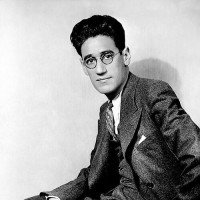
Portrait: Unknown photographer; portrait published in the New-York Tribune, October 29, 1922, via Library of Congress, Chronicling America. Public domain in the United States because of its 1922 publication. Existing newspaper portrait extraction; resized RGB display derivative. Bijog may resize or crop thumbnails. Wikimedia Commons source; Public-domain and reuse information.