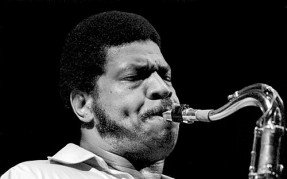
Herbie Hancock
Edit Enlarge Image
Herbie Hancock is an American pianist, keyboardist and composer whose recordings connect acoustic jazz, electronic music and funk. His career includes a formative period with Miles Davis, albums such as Maiden Voyage and Head Hunters, and the electronic hit “Rockit.” He has also worked in film music, education and international cultural exchange.
Explore Related Biographies
Selected for this profile


People Mentioned in This Biography


Early life and education
Herbert Jeffrey Hancock was born on April 12, 1940, in Chicago, Illinois. He began piano lessons as a child and performed a Mozart concerto with the Chicago Symphony Orchestra at eleven. At Grinnell College in Iowa, his interests included science and music. In a National Endowment for the Arts interview, he explained that he initially studied pre-engineering before changing his major to music composition, clarifying the often-repeated description of a double major.
Blue Note recordings and Miles Davis
Trumpeter Donald Byrd brought Hancock into his New York group in 1961. A Blue Note recording contract followed, and his debut album Takin' Off introduced “Watermelon Man.” His Blue Note biography traces both his development as a composer and his growing work as a recording musician.
Hancock joined Davis in 1963 and remained in his band for five years. Working with bassist Ron Carter and drummer Tony Williams, he helped develop a flexible rhythm-section approach built around close listening and shifting musical ideas. He continued recording as a leader during this period, producing compositions including “Cantaloupe Island” and “Maiden Voyage.” These recordings established a body of acoustic music that remained central to his career as he explored electronic instruments.
Head Hunters, Rockit and film music
After leaving Davis's group, Hancock experimented with electric piano and synthesizers. Head Hunters, released in 1973, brought jazz improvisation together with prominent funk rhythms, including the track “Chameleon.” A decade later, “Rockit” reached a new audience through its electronic sound and music video. The Recording Academy identifies “Rockit” as the recording that earned his first Grammy.
Film composition became another significant part of his work. His scores include Blow-Up and 'Round Midnight. For the latter, Hancock won the original score Oscar at the 1987 Academy Awards, extending his recognition beyond the recording industry.
Collaborations, awards and public work
Hancock revisited songs associated with Joni Mitchell on River: The Joni Letters, released in 2007. It won Album of the Year at the 2008 Grammys. The Recording Academy lists fourteen competitive Grammy wins and honored him with a Lifetime Achievement Award in 2016.
His collaborations also include Chris Botti. Universal Music's release notes for Impressions identify Hancock as the pianist featured with Botti on “Tango Suite,” illustrating his continued work across different instrumental settings.
As a UNESCO Goodwill Ambassador, Hancock has helped lead International Jazz Day. The 2026 global concert in Chicago marked the event's fifteenth anniversary in his hometown. His public work places performance alongside music education and dialogue between cultures, while his official website continues to list touring activity.
Portrait credit
Photo: Shawn Miller / Library of Congress. Wikimedia Commons source; CC0 1.0 Universal. Preview resized for display and automatic site thumbnail crop; image adaptations under the same license.