
John Nash
Edit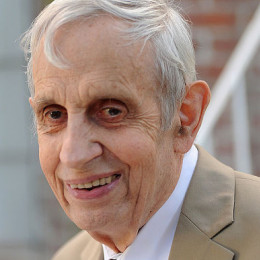 Enlarge Image
Early Life and Education
John Forbes Nash Jr. was born on June 13, 1928, in Bluefield, West Virginia, United States. He was the son of John Forbes Nash Sr., an electrical engineer, and Margaret Virginia Nash, a schoolteacher. Displaying strong intellectual promise from an early age, Nash pursued advanced mathematics courses while still in high school. He later enrolled at the Carnegie Institute of Technology (now Carnegie Mellon University) on a George Westinghouse Scholarship.
Quick Facts
- Net Worth 2021
- 1.5 million
Explore Related Biographies
Selected for this profile


Nash graduated in 1948 with both a Bachelor of Science and a Master of Science in mathematics. That same year, he received a prestigious scholarship to attend Princeton University, where he continued his studies and developed a reputation for his originality in solving complex mathematical problems.
Contributions to Mathematics and Economics
While at Princeton, Nash made groundbreaking contributions to several fields, including game theory, differential geometry, and partial differential equations. His most influential achievement was the development of the concept now known as the Nash Equilibrium—a foundational principle in modern economic theory. This work laid the groundwork for the modern field of game theory and had wide-ranging applications in economics, evolutionary biology, and political science.
For his contributions, Nash was awarded the Nobel Memorial Prize in Economic Sciences in 1994, shared with Reinhard Selten and John Harsanyi. He is one of the few individuals to have received both the Nobel Memorial Prize in Economic Sciences and the Abel Prize—the latter being awarded in 2015 for his contributions to nonlinear partial differential equations and their applications in geometric analysis.
Academic and Professional Career
Following his time as a graduate student, Nash remained deeply involved with the academic community, particularly at Princeton University. He eventually became a Senior Research Mathematician at Princeton, a position in which he continued to pursue his research and mentor students.
Personal Life and Mental Health
In 1957, Nash married Alicia Lardé Lopez-Harrison, an MIT physics graduate originally from El Salvador. Their marriage endured decades of challenges, particularly during Nash's prolonged struggle with mental illness. In the late 1950s, Nash began exhibiting signs of paranoid schizophrenia, an illness that would shape much of his personal and professional life for years. He spent intermittent periods in psychiatric hospitals, receiving various treatments throughout the 1960s and 1970s.
Despite these challenges, Nash gradually experienced a recovery and eventually returned to academic life. His resilience and intellectual contributions were later portrayed in the 2001 Academy Award-winning film A Beautiful Mind, starring Russell Crowe as Nash. The film brought renewed public interest to both his work and personal story.
Death and Legacy
On May 23, 2015, John Nash and his wife Alicia were tragically killed in a car accident on the New Jersey Turnpike while returning from a trip to Norway, where Nash had recently received the Abel Prize. They are survived by their two sons. Nash's legacy endures not only through his contributions to mathematics and economics but also as a symbol of perseverance in the face of mental illness.