Langston Hughes
Edit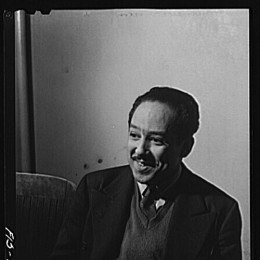 Enlarge Image
Langston Hughes was an American poet, novelist, playwright and columnist whose writing made Black American life central to the literature of the Harlem Renaissance. His work joined observations of everyday speech with the rhythms of blues and jazz. His books include The Weary Blues, Not Without Laughter and Montage of a Dream Deferred.
Explore Related Biographies
Selected for this profile

People Mentioned in This Biography
Early life and education
Hughes was born in Joplin, Missouri, on February 1, 1901. The Academy of American Poets explains that the long-repeated birth year of 1902 was revised following research published in 2018. He spent much of his childhood with his grandmother in Lawrence, Kansas, before living with his mother and eventually settling in Cleveland.
After high school, Hughes spent time in Mexico and attended Columbia University for a year. He also worked in service jobs and traveled as a seaman. He later continued his education at Lincoln University in Pennsylvania. The university’s history records his graduation in 1929, distinguishing his completed degree there from his earlier period at Columbia.
The Harlem Renaissance and The Weary Blues
“The Negro Speaks of Rivers” appeared in The Crisis in 1921, early in Hughes’s publishing career. His first poetry collection, The Weary Blues, followed in 1926. The official account of his literary career connects his developing voice with travel, racial injustice and the music of Harlem.
As the Poetry Foundation’s reading guide shows, Hughes wrote about people working, talking, loving and trying to make a life under unequal conditions. His use of blues and jazz was part of the writing’s structure and movement, rather than simply a choice of subject. The poems brought musical repetition, changing rhythms and recognizable voices into literary form.
Poems, books and dreams deferred
His work continued to develop beyond his first collection. Montage of a Dream Deferred (1951) follows a changing Harlem through a sequence of poems. Among them is “Harlem,” which explores what becomes of hopes repeatedly postponed.
The Poetry Foundation’s discussion of “Harlem” places the poem within that larger sequence and its engagement with contemporary Black music. Reading it in this setting connects its question about an unrealized dream with the surrounding neighborhood, voices and social pressures.
Hughes also wrote fiction. Not Without Laughter (1930) was his first novel, and The Ways of White Folks (1934) collected short stories. His prose examined race and relationships through humor as well as conflict. His autobiography The Big Sea appeared in 1940.
Theater, Street Scene and Simple
Writing for the stage became another sustained part of Hughes’s career. His work included Mulatto and, later, the gospel-centered Black Nativity (1961). These productions gave different theatrical forms to concerns and musical traditions also present in his poetry.
Hughes collaborated with composer Kurt Weill on Street Scene. The Kurt Weill Foundation’s work catalogue identifies Elmer Rice as the author of the book and Hughes and Rice as lyricists. The American opera opened on Broadway on January 9, 1947, bringing a New York tenement community into a work combining dramatic and musical traditions.
Hughes reached newspaper readers through Jesse B. Semple, usually called Simple, a fictional Harlem resident whose conversations joined humor with commentary on Black life. The character’s stories also appeared in book collections, extending Hughes’s readership beyond poetry and the theater.
Death and continuing readership
Hughes died in New York City on May 22, 1967. His poems, fiction, plays and newspaper writing remain connected by an interest in the lives and language of ordinary people. His career offers a wider body of work than the individual poems through which many readers first encounter him.
Portrait credit
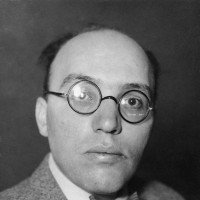
Photograph: Jack Delano, Chicago, April 1942. Library of Congress, FSA/OWI Collection, LC-USW3-001542-D, digital ID fsa.8d03804. Wikimedia Commons source; public-domain U.S. government photograph. Resized Commons preview; no additional retouching. The site may resize or crop the portrait for display.