Arrigo Boito
Edit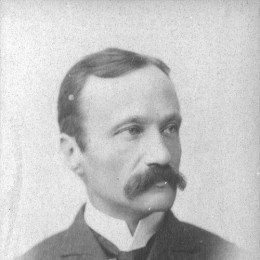 Enlarge Image
Arrigo Boito was an Italian composer, poet and librettist whose work joined literary experimentation to musical theater. He wrote the words and music for Mefistofele and supplied libretti for Giuseppe Verdi's Otello and Falstaff. His career also encompassed criticism, translation and public service.
Explore Related Biographies
Selected for this profile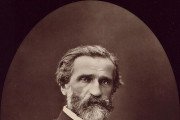

People Mentioned in This Biography
Early life and musical education
Boito was born in Padua on February 24, 1842. He grew up in Venice before entering the Milan Conservatory in 1853, studying instruments and composition. According to the Comitato Boito biography, he studied with Alberto Mazzucato and graduated in composition in 1861. His fellow student Franco Faccio became an important early collaborator, including on their conservatory work Le sorelle d'Italia.
Mefistofele: composer and librettist
Boito's best-known opera as a composer, Mefistofele, draws on Goethe's Faust. Its first production at La Scala in Milan in 1868 encountered intense opposition. Minnesota Opera's account describes a work that challenged conventions of Italian opera and was withdrawn after two performances. Boito substantially revised it, and the Bologna production of 1875 established a more durable version.
Writing both the score and the libretto gave Boito responsibility for the opera's language as well as its musical shape. The revised Mefistofele continued in the Italian repertory, even though his later reputation also became closely tied to writing words for other composers.
Verdi, Otello and Falstaff
The partnership with Verdi had an early beginning: in 1862 Boito provided the text for Inno delle nazioni, or Hymn of the Nations. Their relationship later became strained by Boito's criticism of Italian musical life. The eventual collaboration on Verdi's late operas therefore followed a complicated professional history rather than a continuous partnership.
The Hungarian State Opera biography dates the renewed collaboration to 1879. Boito revised the libretto of Simon Boccanegra for its 1881 revival, then adapted Shakespeare for Otello in 1887 and Falstaff in 1893. These were separate achievements: a reworking of an earlier opera, a tragedy and a comedy.
He also wrote the libretto of Amilcare Ponchielli's La Gioconda, first staged in 1876. For that work he used the pen name Tobia Gorrio. His writing for other composers included Faccio's Amleto.
Poetry, theater and Nerone
Boito participated in the Milanese artistic movement known as the Scapigliatura. His literary work included the experimental verse tale Re Orso, first published in 1865. The committee's bibliography records the 1877 volume Il libro dei versi. Re Orso, documenting a literary career alongside the operas.
He also translated Shakespeare for the actress Eleonora Duse. His version of Antony and Cleopatra was staged in Milan in 1888. Meanwhile, he continued working on another opera, Nerone, without finishing it during his lifetime. A posthumously prepared version reached the stage in Milan in 1924.
Public service and death
Boito became a senator of the Kingdom of Italy in 1912. His Senate appointment file records the decree of March 17 and notes his death in Milan on June 10, 1918. He was 76. His surviving work spans an unusual combination of opera composition, libretti, poetry and theatrical adaptation.
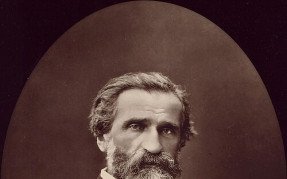
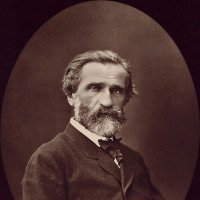
Portrait credit: Unidentified photographer, historical portrait of Arrigo Boito, published in 1908 by Chocolats Félix Potin. Public domain; Wikimedia Commons. Existing lossless crop by Ras67; resized Commons preview converted from grayscale to RGB, plus automatic site thumbnail crop. Original portrait and reuse information. Public domain.