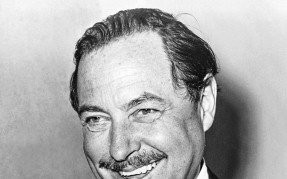
Eugene Gladstone O'Neill
Edit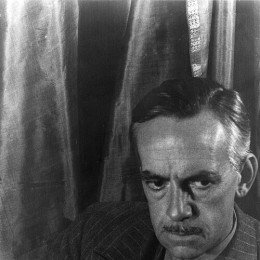 Enlarge Image
Eugene O'Neill was an American playwright whose work helped establish modern American drama as a major literary form. His plays brought sailors, laborers, troubled families and disappointed dreamers into serious theater. A Nobel laureate and four-time Pulitzer Prize winner, he is best known for works including Long Day's Journey Into Night, The Iceman Cometh and Mourning Becomes Electra.
Explore Related Biographies
Selected for this profile
People Mentioned in This Biography
Early life and education
Eugene Gladstone O'Neill was born in New York City on October 16, 1888. His father, James O'Neill, was an actor, and much of Eugene's early childhood was spent traveling with the family as his father toured. His Nobel Prize biographical account describes those years in hotels and trains, followed by schooling and a year at Princeton University in 1906–07.
He then worked at a variety of jobs, traveled abroad and spent time at sea. Those experiences supplied settings and situations for some of his early plays. After a period of illness, he began writing more seriously. He later attended George Pierce Baker's course in dramatic technique at Harvard, leaving after a year without completing the course.
The Provincetown Players and Broadway
O'Neill developed as a dramatist through experimental theater as well as commercial productions. Bound East for Cardiff, a short play drawing on seafaring life, became associated with the Provincetown Players in 1916. The group provided a setting in which his early work could be staged while he developed a more ambitious dramatic voice.
His first full-length Broadway success was Beyond the Horizon in 1920. It won that year's Pulitzer Prize for Drama. Further prizes followed for Anna Christie in 1922 and Strange Interlude in 1928. The National Park Service's awards history records these honors and the posthumous fourth Pulitzer for Long Day's Journey Into Night in 1957.
Major plays and the Nobel Prize
His dramatic range extended beyond a single kind of realism. Plays such as The Emperor Jones and The Hairy Ape explored forceful theatrical forms, while Desire Under the Elms and Mourning Becomes Electra developed family tragedy. He also wrote the comedy Ah, Wilderness!, a different view of American domestic life from the darker households familiar in much of his work.
In 1936, he became the first American playwright to receive the Nobel Prize in Literature. The award recognized his work across a career, rather than a single newly released play. The National Park Service's introduction places that recognition within his development as a writer concerned with inner conflict, memory and the limits of personal hope.
Tao House and Long Day's Journey Into Night
At Tao House in Danville, California, O'Neill wrote several of his major late works. The National Park Service timeline connects this period with The Iceman Cometh, Long Day's Journey Into Night and A Moon for the Misbegotten. The house is now preserved as the Eugene O'Neill National Historic Site.
Long Day's Journey Into Night examines the Tyrone family over the course of a single day. Although deeply connected with his own family's experiences, it is a dramatic work rather than a documentary account. Publication and production came after his death, with its first staging in Stockholm in 1956.
The Broadway production opened on November 7, 1956, directed by José Quintero, with Fredric March playing James Tyrone alongside Florence Eldridge, Jason Robards Jr. and Bradford Dillman. The play's publisher, Concord Theatricals, records the production and cast. March's performance became one of his major stage achievements.
Death and continuing legacy
O'Neill died in Boston on November 27, 1953, aged 65. His major late plays subsequently reached wider audiences through publication, revivals and adaptations. The preservation of Tao House and organizations devoted to his work have created further ways to study the writing and the circumstances in which it developed.
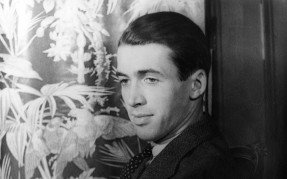
Portrait credit: Carl Van Vechten, September 5, 1933; Library of Congress, Prints and Photographs Division, Carl Van Vechten Collection, van.5a52500, via Wikimedia Commons. The Library considers this collection public domain. Commons 500px resized derivative; no additional local crop or colorization. Bijog may resize images and crop thumbnails.