James Maitland Stewart
Edit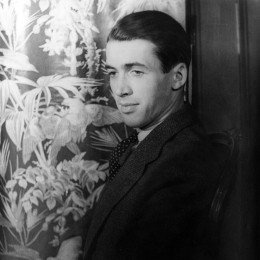 Enlarge Image
James Stewart, widely known as Jimmy Stewart, was an American actor and military aviator. His film roles ranged from the hopeful senator in Mr. Smith Goes to Washington to George Bailey in It's a Wonderful Life and the troubled detective in Vertigo. An Academy Award winner, he also served in World War II and later became a brigadier general in the Air Force Reserve.
Explore Related Biographies
Selected for this profile
People Mentioned in This Biography
Early life, education and first films
James Maitland Stewart was born on May 20, 1908, in Indiana, Pennsylvania. His family operated a hardware business, but his education and theatrical interests eventually took him elsewhere. He attended Mercersburg Academy and Princeton University, graduating with a degree in architecture. The Jimmy Stewart Museum's biography traces his upbringing, studies and transition into performing.
Stage work led to a contract with MGM. His first feature film was The Murder Man (1935), in which he played a reporter opposite Spencer Tracy. Further parts included Next Time We Love and Born to Dance. These early assignments preceded the leading roles that would make his hesitant delivery and unassuming manner familiar to film audiences.
The Philadelphia Story and an Oscar
Director Frank Capra cast Stewart in You Can't Take It with You and then Mr. Smith Goes to Washington (1939). The latter brought his first Oscar nomination. In The Philadelphia Story (1940), he played reporter Macaulay Connor alongside Cary Grant and Katharine Hepburn.
That performance won Best Actor at the 1941 Academy Awards, which honored films released in 1940. The distinction matters when reading accounts that describe it as his “1940 Oscar.” The American Film Institute's profile places the film within his rise from supporting performer to major Hollywood star.
World War II and military service
Stewart entered the armed forces on March 22, 1941. An experienced civilian pilot, he trained with the Army Air Corps, received a commission and later commanded a B-24 bomber squadron in England. The National Museum of the U.S. Air Force records 20 combat missions during the war.
His service continued alongside his postwar acting career. He remained in the Air Force Reserve, was promoted to brigadier general on July 23, 1959, and retired on May 31, 1968. His military record therefore extended well beyond a brief wartime interruption of filmmaking.
It's a Wonderful Life, Westerns and Hitchcock
Returning to films after the war, Stewart reunited with Capra for It's a Wonderful Life (1946). His portrayal of George Bailey earned another Oscar nomination. He later played Elwood P. Dowd in Harvey, a role built around a man whose companion is an invisible rabbit.
Winchester '73 began an important association with director Anthony Mann and established another direction for Stewart's screen career. His other work included Anatomy of a Murder and Hitchcock's Rear Window and The Man Who Knew Too Much, demonstrating the range of his postwar roles.
In Hitchcock's Vertigo (1958), Stewart starred with Kim Novak and Barbara Bel Geddes. He played Scottie Ferguson, whose investigation becomes entangled with obsession and fear. The AFI Catalog's production record documents the cast and the film's development.
Later work, family and legacy
Stewart continued working in films such as The Man Who Shot Liberty Valance, Shenandoah and The Flight of the Phoenix. Television appearances included The Jimmy Stewart Show and Hawkins. He also became known to another audience through readings and publication of his poems.
He married Gloria Hatrick McLean in 1949. Their family included twin daughters and her two sons from an earlier marriage. His later honors included AFI's Life Achievement Award in 1980 and an honorary Academy Award presented in 1985. Stewart died on July 2, 1997, aged 89. The museum in his Pennsylvania hometown preserves material relating to both his screen career and military service.
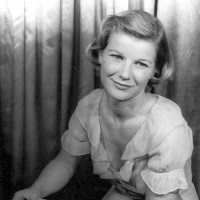
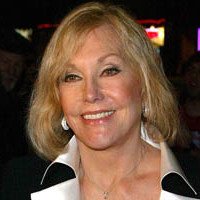
Portrait credit: Carl Van Vechten, October 15, 1934; Library of Congress, Prints and Photographs Division, Carl Van Vechten Collection, LC-USZ62-103682, via Wikimedia Commons. The Library considers the photograph public domain. Full Commons image, downloaded as a 960px resized derivative; no additional local editing. Bijog may resize images and crop thumbnails.