Jon Lord
Edit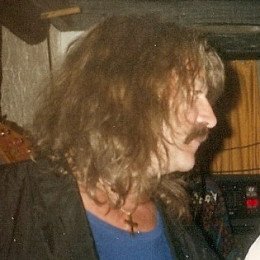 Enlarge Image
Jon Lord was an English keyboardist and composer who helped found Deep Purple and became closely associated with the Hammond organ in hard rock. He also performed with Whitesnake and built a parallel career writing for orchestras, solo instruments and voices. His Concerto for Group and Orchestra brought those musical interests together.
Explore Related Biographies
Selected for this profile


People Mentioned in This Biography
Early Life and Musical Training
Lord was born on June 9, 1941, in Leicester, England. His publisher’s biography records his early piano and music-theory lessons. Classical training remained an important foundation for a musician who later worked across blues, rock and concert music.
He moved to London in 1960 to study drama and supported himself by playing in pubs. His official biography traces that period and his subsequent membership of the Artwoods. He acquired his first electric organ in 1963, before the formation of the band that would make him internationally known.
Deep Purple and the Hammond Organ
In 1968, Lord co-founded Deep Purple with fellow musicians including guitarist Ritchie Blackmore. Their instrumental partnership became a central feature of the group. Lord’s official biography describes his use of Marshall amplification with the Hammond organ, helping the keyboards stand alongside the electric guitar in the band’s heavier arrangements.
The Mark II lineup also included singer Ian Gillan, bassist Roger Glover and drummer Ian Paice. Lord played on Machine Head, the 1972 album containing “Smoke on the Water,” “Highway Star” and “Lazy.” Rhino’s account of the recording documents the musicians’ work in Montreux after a fire destroyed their intended recording venue.
Concerto for Group and Orchestra
Lord’s orchestral ambitions developed alongside his rock career. On September 24, 1969, Deep Purple performed his Concerto for Group and Orchestra at London’s Royal Albert Hall with the Royal Philharmonic Orchestra conducted by Malcolm Arnold. The official recording credits identify the performers and date.
The work gave the rock group and orchestra distinct roles within a larger composition. It also established a continuing strand of Lord’s work. Schott’s biography documents later pieces including the BBC-commissioned Gemini Suite, Windows and Sarabande, extending his writing beyond the format of a rock album.
Whitesnake and the Deep Purple Reunion
After Deep Purple’s first breakup, Lord worked with Paice Ashton Lord and then joined Whitesnake, where he played from 1978 to 1984. He returned to Deep Purple for the Perfect Strangers reunion. The University of Leicester’s account of his career, published when he received an honorary degree, records these stages.
He remained with Deep Purple until 2002, when he left to concentrate on composition and performances of his own music. His years with the band included the arrival of guitarist Steve Morse, who would also contribute to Lord’s later orchestral recording work.
Later Compositions and Recordings
Lord’s later catalog included Beyond the Notes, released in 2004, the piano concerto Boom of the Tingling Strings and the string-orchestra suite Disguises. His Durham Concerto was premiered in Durham Cathedral in 2007 for the university’s 175th anniversary. Schott’s catalog describes its combination of violin, cello, Northumbrian pipes, Hammond organ and orchestra.
He also returned to the Concerto for Group and Orchestra for a studio version recorded in 2011 and 2012. The official project page lists Paul Mann as conductor and collaborators including Morse, Joe Bonamassa, Bruce Dickinson, Steve Balsamo and Kasia Laska. The recording revisited a composition that had remained part of his musical life for more than four decades.
Death and Legacy
Lord died on July 16, 2012, aged 71. His publisher and official biography confirm the date. The University of Leicester had awarded him an honorary Doctor of Music degree in 2011, recognizing a career that connected popular performance with composition.
His music continued to circulate in recorded and written form. A 2016 announcement from his official site documented the first printed publication of the Concerto score, edited by Paul Mann, alongside a revised edition of Sarabande. That publication made an important part of his work available for future performances. He was also included among the Deep Purple musicians honored in the band’s 2016 Rock & Roll Hall of Fame induction.
Portrait Credit
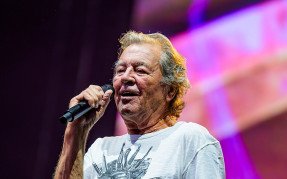
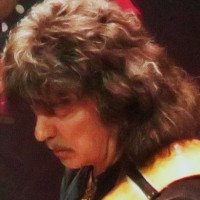
Portrait: Menerbes, Jon Lord at a Hotel Post performance, March 1990. Wikimedia Commons portrait, cropped by Horz from the original photograph. Creative Commons Attribution-ShareAlike 3.0. Existing crop used; resized for display and automatically cropped for the site thumbnail. Photograph and derived thumbnail remain under CC BY-SA 3.0.