Josip Broz Tito
Edit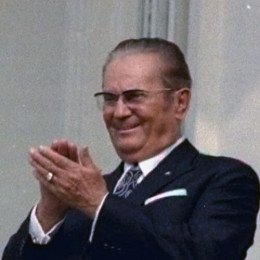 Enlarge Image
Josip Broz Tito was a Yugoslav communist leader whose career spanned the Second World War and much of the Cold War. Born Josip Broz and widely known as Tito, he led the Partisan resistance, headed postwar Yugoslavia and served as its president from 1953 until his death in 1980. His international independence and role in non-aligned diplomacy developed alongside authoritarian government at home.
Explore Related Biographies
Selected for this profile
People Mentioned in This Biography
Early life and political beginnings
Tito was born on May 7, 1892, in Kumrovec, then part of Austria-Hungary and now in Croatia. According to Ohio State University's historical biography, he served in the Austro-Hungarian army during the First World War and was captured by Russian forces. He later became a union organizer and communist activist.
Partisan leadership during the Second World War
By 1941, Tito had emerged as a leader of the Yugoslav Partisans resisting the occupying Axis powers. The movement combined military resistance with plans for a federal Yugoslav state. The Museum of Yugoslavia's historical collections include a German arrest warrant for Tito dated July 20, 1943, documenting the occupation authorities' pursuit of the resistance leader.
Postwar government and political control
Following the war, Yugoslavia's monarchy was abolished and a communist-led federal republic took shape under Tito. His government nationalized industry and restricted political opposition. Ohio State's account describes the suppression of opponents, secret-police power and purges within the ruling party. He became president in 1953 and remained the country's dominant political figure for the rest of his life.
The split with Stalin in 1948
Yugoslavia initially cooperated closely with the Soviet Union, but Tito resisted subordination to Moscow. In 1948, the Yugoslav Communist Party was expelled from the Cominform, the organization coordinating communist parties. The break created a major division within the communist world.
A September 1948 U.S. diplomatic assessment reported that Tito remained firmly in control despite Soviet pressure and argued for a more active American policy toward Yugoslavia. The document shows how his survival acquired strategic importance for Western governments. Yugoslavia subsequently developed trade and other relationships across the Cold War divide.
Non-aligned diplomacy and relations with the United States
Tito became closely associated with non-alignment, working with leaders including India's Jawaharlal Nehru and Egypt's Gamal Abdel Nasser. OpenStax's world-history account explains his effort to maintain independence from both superpower blocs. At the United Nations in 1960, he called for cooperation among countries outside those blocs.
Archival records of the 1961 Belgrade conference preserve his opening address on September 1. His diplomacy also included contacts with American presidents. In October 1971, he visited the White House, where Richard Nixon received him; the visit is documented in National Archives photographs.
Everyday lives under Tito's government
The period also shaped migration and family histories. Chef Lidia Bastianich grew up in Pula when it was part of Yugoslavia. A Smithsonian account of her memoir describes her family's flight to Trieste, Italy, and two years in a refugee camp before resettlement in New York. Her recollections offer one personal perspective on life under the communist regime.
Death and historical memory
Tito died on May 4, 1980. He was buried in Belgrade's House of Flowers, now part of the Museum of Yugoslavia complex. The museum's exhibition Comrade Tito has Died examines his death, public remembrance and the uncertainty that followed, bringing critical perspectives into its presentation of his legacy.
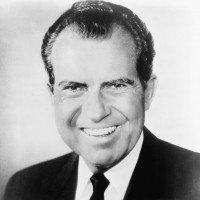
Portrait credit: Josip Broz Tito at the White House, October 28, 1971. White House Photo Office, credited to Byron E. Schumaker in the related Commons documentation; National Archives identifier 194386, via Wikimedia Commons. Public-domain U.S. federal government photograph. Existing portrait crop, resized for Commons and site display; no additional editorial retouching.