Richard Nixon
Edit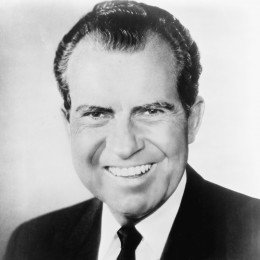 Enlarge Image
Richard Nixon was the 37th president of the United States, serving from January 1969 until his resignation in August 1974. A Republican who had previously served as vice president, he pursued major diplomatic openings during the Cold War. His presidency also encompassed the continuation and escalation of the Vietnam War and ended in the Watergate scandal.
Explore Related Biographies
Selected for this profile
People Mentioned in This Biography
Early life, education and military service
Richard Milhous Nixon was born on January 9, 1913, in Yorba Linda, California, and grew up in nearby Whittier. The National Archives biography records his education at Whittier College and Duke University School of Law. He returned to California to practice law before entering federal service.
Nixon married Patricia “Pat” Ryan in 1940. They had two daughters, Tricia and Julie. In 1942, he received a commission in the U.S. Navy and subsequently served in the Pacific during the Second World War. His experience as a lawyer and veteran preceded his entry into elected politics.
Congress, the vice presidency and the 1968 election
Nixon won election to the House of Representatives in 1946 and to the Senate in 1950. His role in the House Un-American Activities Committee's investigation of Alger Hiss helped establish his national reputation as an anti-communist. Dwight D. Eisenhower selected him as his running mate in 1952, and Nixon served as vice president from 1953 to 1961.
He lost the 1960 presidential election to John F. Kennedy and the 1962 California gubernatorial election. Those defeats did not end his political career. He won the presidency in 1968 and secured reelection in 1972. The Nixon Presidential Library's chronology places these campaigns within his longer rise from California politics to national office.
China, the Soviet Union and Vietnam
The State Department's historical account describes a foreign-policy process centered on Nixon and national security adviser Henry Kissinger. Nixon's 1972 visits to Beijing and Moscow marked an opening toward the People's Republic of China and a period of détente with the Soviet Union. These initiatives changed the diplomatic setting of the Cold War.
Vietnam remained a defining conflict. Nixon reduced American troop levels while seeking to strengthen South Vietnamese forces, a policy called Vietnamization. He also ordered secret bombing in Cambodia and the 1970 cross-border intervention, expanding the conflict and provoking opposition at home. The State Department's Vietnam history distinguishes the January 1973 agreement and American withdrawal from the end of the war itself: fighting between the Vietnamese sides continued afterward.
At home, Nixon's administration reorganized federal environmental responsibilities to create the Environmental Protection Agency in 1970. The EPA's institutional history documents the reorganization plan that brought previously separate environmental functions together.
Watergate and resignation
The 1972 break-in at Democratic National Committee headquarters in the Watergate complex led to investigations of the burglary, its cover-up and abuses of presidential power. The Senate's history of the Watergate committee describes the televised hearings, testimony implicating the White House and the discovery of Nixon's recording system. The resulting evidence undermined his political support as impeachment proceedings advanced.
Nixon resigned effective August 9, 1974, and Vice President Gerald Ford succeeded him. Ford granted him a pardon the following month. The Ford Library's Watergate exhibit preserves the text and context of that decision. Nixon's resignation, rather than an impeachment vote by the full House, ended his presidency.
Staff, later life and historical record
Among those who worked in Nixon's White House was David Gergen, who joined the speechwriting staff in 1971. Harvard Kennedy School's account of Gergen's career documents that connection before his service to subsequent presidents.
The Nixon Library's chronology records his later life. After leaving office, he traveled, spoke publicly and wrote extensively about politics and international affairs. He died in New York City on April 22, 1994, and was buried in Yorba Linda. His presidential records and library remain sources for studying both his diplomacy and the misconduct that brought his administration to an end.
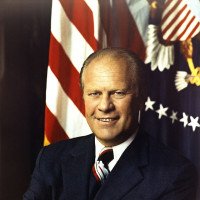
Portrait: Official presidential photograph, dated 1969–1974, Executive Office of the President; individual photographer unidentified. Existing Commons horizontal crop and resized preview; further site resizing and thumbnail crop. Original file and federal-work rights record. Public domain in the United States: U.S. federal government work.