Ritchie Blackmore
Edit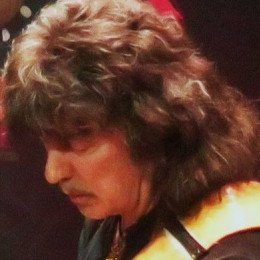 Enlarge Image
Ritchie Blackmore is an English guitarist and songwriter whose career spans Deep Purple, Rainbow and Blackmore’s Night. His playing helped shape hard rock through forceful riffs, extended solos and classical influences, while his later acoustic work explored Renaissance and folk music. He is closely associated with “Smoke on the Water,” one of Deep Purple’s best-known recordings.
Explore Related Biographies
Selected for this profile

People Mentioned in This Biography


Early Life and Session Work
Born Richard Hugh Blackmore on April 14, 1945, in Weston-super-Mare, England, he became known professionally as Ritchie Blackmore. His birth date and birthplace are documented in WDR’s birthday retrospective, while the Blackmore’s Night UK biography records his full name.
He began his professional career before Deep Purple, working in the British recording and backing-band scene. His official biography identifies session work for producer Joe Meek, membership of the Outlaws and performances with artists including Heinz, Glenda Collins and Screaming Lord Sutch. Those jobs gave him experience across different styles before he became a bandleader and internationally recognized guitarist.
Deep Purple and Smoke on the Water
Blackmore was a founding member of Deep Purple, formed in 1968. His guitar became a defining element of the group alongside Jon Lord’s organ. In the celebrated Mark II lineup, singer Ian Gillan, bassist Roger Glover and drummer Ian Paice completed a band that connected instrumental interplay with a heavier rock sound.
The 1972 album Machine Head included “Highway Star,” “Space Truckin’” and “Smoke on the Water.” Rhino’s account of the sessions describes how a fire at the intended Montreux Casino recording venue forced the musicians to relocate to the nearby Grand Hotel. The fire also became the subject of “Smoke on the Water,” linking an unusually recognizable guitar introduction to an event the band had witnessed.
His concert playing was documented on Made in Japan, assembled from the band’s August 1972 performances in Osaka and Tokyo. The label’s release history records its British release in December 1972 and American release the following March. The album preserved the Mark II lineup stretching its studio material into longer live performances.
Rainbow and Ronnie James Dio
After leaving Deep Purple in 1975, Blackmore established Rainbow. His early partnership with singer Ronnie James Dio produced three studio albums: Ritchie Blackmore’s Rainbow in 1975, Rising in 1976 and Long Live Rock ’n’ Roll in 1978. Dio’s official discography also lists the live album On Stage between the latter two releases.
Rainbow gave Blackmore a setting for combining hard-rock guitar with more ornate melodic ideas. The band changed personnel and musical direction over time; his official biography describes its progression toward more accessible, pop-oriented hard rock. The Dio-era recordings remain a distinct chapter within that changing catalog.
Return to Deep Purple
In 1984, Blackmore reunited with Gillan, Glover, Lord and Paice for Perfect Strangers and a subsequent tour. Deep Purple’s official account of the reunion identifies it as the first time that lineup had been together since 1973.
Blackmore left again in 1993. Deep Purple continued into another guitar era, with Steve Morse joining in 1994. The band’s 2022 statement about Morse documents his long subsequent tenure. Blackmore’s own recordings and the band’s later history developed along separate paths.
Blackmore’s Night and Acoustic Music
In 1997, Blackmore formed Blackmore’s Night with singer and lyricist Candice Night. Their debut, Shadow of the Moon, centered on acoustic music inspired by medieval and Renaissance traditions. earMUSIC’s anniversary release notes describe that change of direction and the album’s 2023 reissue.
The collaboration became a substantial recording career in its own right. Nature’s Light, released on March 12, 2021, was the group’s eleventh studio album, according to the label’s announcement. Blackmore’s use of acoustic and electric instruments connected his earlier rock identity with the band’s folk arrangements.
Guitars, Recognition and the 2026 Guest Appearance
His association with the Fender Stratocaster also led to a signature instrument. Fender’s description identifies a design based on his favored 1970s model, with a graduated scalloped fingerboard and specialized pickups.
Blackmore was among the Deep Purple members inducted into the Rock & Roll Hall of Fame in 2016. On August 12, 2026, he joined Deep Purple at Jones Beach for an encore of “Smoke on the Water.” The band’s announcement the following day confirms the appearance. His own official site also describes the meeting after 33 years. The notices describe a guest appearance.
Portrait Credit
Portrait: Egghead06, Ritchie Blackmore performing in June 2016. Wikimedia Commons cropped file, from the original photograph. Creative Commons Attribution-ShareAlike 4.0. Existing contrast and gamma adjustment by CuriousEric; crop by Roadrunnermeep. Used as supplied, resized for display and automatically cropped for the site thumbnail. Photograph and derived thumbnail remain under CC BY-SA 4.0.