Ira Gershwin
Edit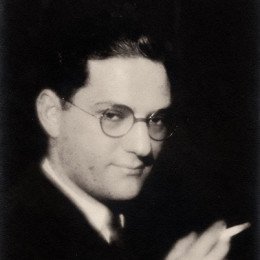 Enlarge Image
Ira Gershwin was an American lyricist whose words helped shape the sound of Broadway and Hollywood. His principal collaborator was his younger brother, composer George Gershwin, but he also wrote with composers including Kurt Weill, Jerome Kern and Harold Arlen. He shared the 1932 Pulitzer Prize for Of Thee I Sing and later documented his craft in Lyrics on Several Occasions.
Explore Related Biographies
Selected for this profile
People Mentioned in This Biography
Early Life, Education and Arthur Francis
Gershwin was born in New York City on December 6, 1896. He attended the College of the City of New York and became interested in light verse and newspaper writing. The Gershwin estate's biography describes his early experiments with lyrics and his use of the pseudonym Arthur Francis, combining the names of two younger siblings.
Under that name, he wrote lyrics for Two Little Girls in Blue (1921), with music by Vincent Youmans and Paul Lannin. The estate's account of his early career places this success after a period of newspaper contributions and jobs outside the theater. By 1924, he had dropped the pseudonym and begun his major partnership with George.
Songs and Broadway Collaboration
Lady, Be Good! (1924), written for Fred and Adele Astaire, helped establish the brothers as a team. Their subsequent work included Oh, Kay!, Funny Face and Girl Crazy. George supplied the music while Ira developed the lyrics; their different contributions were central to the partnership.
The Songwriters Hall of Fame highlights the lasting place of these songs in the American repertoire. Ira's work was that of a lyricist, a distinction that matters when discussing the brothers' shared catalogue.
Of Thee I Sing and Porgy and Bess
Ira shared the 1932 Pulitzer Prize for Drama for Of Thee I Sing with its book writers, George S. Kaufman and Morrie Ryskind. The award made him the first lyricist to receive a Pulitzer Prize.
He later participated in Porgy and Bess (1935), working with George and DuBose Heyward. The opera developed from Heyward's novel and the stage adaptation by DuBose and Dorothy Heyward. Its official catalogue entry credits all four creators; its lyrics were a collaboration between Ira and DuBose Heyward, rather than Ira's work alone.
Kurt Weill, Moss Hart and Film Songs
After George's death in 1937, Ira continued writing with other composers. For Lady in the Dark (1941), he supplied lyrics to Kurt Weill's music, with the book and direction by Moss Hart. The Weill Foundation's chronology records the production's Broadway opening on January 23, 1941.
His later film work included Cover Girl (1944), with Jerome Kern, and A Star Is Born (1954), with Harold Arlen. Across his film career he received three Academy Award nominations, for They Can't Take That Away from Me, Long Ago (and Far Away) and The Man That Got Away.
Memoir, Marriage and Legacy
Ira married Leonore Strunsky in 1926. His book Lyrics on Several Occasions, published in 1959, combined lyrics with reflections on writing them. He also devoted substantial effort to organizing manuscripts and lyric sheets and donating materials to the Library of Congress.
The Library's collection chronology records this archival work and his later life. Ira died in Beverly Hills, California, on August 17, 1983, aged 86. His materials preserve both the finished songs and evidence of the craft behind them.
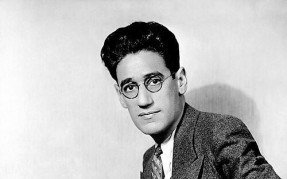
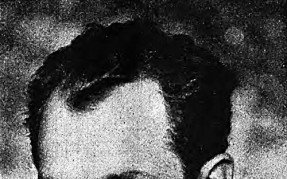
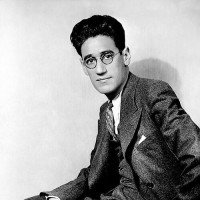
Portrait credit: Unknown photographer, as catalogued by Wikimedia Commons; 1925 or earlier. The file page documents publication in Time, July 20, 1925, page 14. Public domain in the United States, through pre-1931 publication. Existing Commons brightness/color adjustment and crop; original studio mark retained; no additional retouching.