Ben Hecht
Edit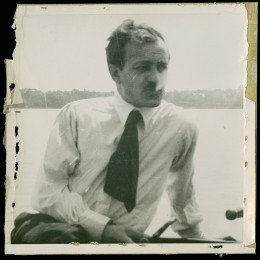 Enlarge Image
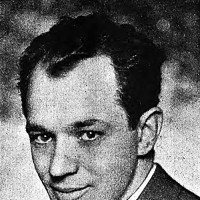
Ben Hecht was an American screenwriter, playwright, journalist and novelist whose work connected Chicago newspapers, Broadway and Hollywood. He shared a long creative partnership with Charles MacArthur, coauthor of The Front Page, and won two Academy Awards for original stories. His career also included books, television and political campaigning, particularly efforts to draw American attention to the persecution and murder of European Jews.
Explore Related Biographies
Selected for this profile
People Mentioned in This Biography
Background, Education and Chicago Journalism
Hecht was born in New York City and grew up in Racine, Wisconsin. Institutional biographies disagree about his birth year: the Newberry's biographical narrative gives February 28, 1893, while the Harry Ransom Center's collection inventory gives February 28, 1894.
In 1910, he briefly attended the University of Wisconsin before leaving for Chicago. He worked for the Chicago Journal and then the Chicago Daily News, gaining experience with the city's courts, crime and street life. He also reported from Berlin after World War I. Alongside reporting, he developed fiction; his novel Erik Dorn appeared in 1921.
His Daily News column 1001 Afternoons in Chicago began in 1921, and 64 pieces were collected in a book the following year. The Newberry describes these as imaginative sketches of the city. They belong to his literary portrait of Chicago rather than a simple compilation of straight news reports.
The Front Page and Charles MacArthur
Hecht's newspaper background found a new form in The Front Page, written with MacArthur. The Broadway League records its original opening on August 14, 1928. Its Chicago press-room setting placed reporters, editors and political officials in the same frantic dramatic world.
The play's licensed publisher describes reporter Hildy Johnson's attempt to leave journalism, disrupted when an escaped prisoner offers the possibility of a major scoop. The struggle between Hildy's private plans and his managing editor's determination gives the comedy its central conflict. The play has returned to Broadway repeatedly, including a 2016 revival.
Movies, Howard Hawks and Academy Awards
Hecht received the Writing (Original Story) award for Underworld at the first Academy Awards in 1929. He and MacArthur later shared the same category for The Scoundrel, a 1935 film honored at the 1936 ceremony.
His film work included Scarface (1932), directed by Howard Hawks; the British Film Institute lists Hecht among its principal creative credits. Hawks also directed His Girl Friday (1940), which used The Front Page as its source. The American Film Institute credits Charles Lederer with that film's screenplay, distinguishing the adaptation from Hecht and MacArthur's original play.
Hecht also wrote Notorious (1946), directed by Alfred Hitchcock and starring Cary Grant, Ingrid Bergman and Claude Rains. The AFI's production history describes Hecht and Hitchcock developing its treatment and subsequent screenplay together.
Holocaust Rescue Campaigns and Political Activism
During World War II, Hecht worked with Peter H. Bergson's network to press for action on behalf of Europe's Jews. His methods included newspaper advertisements and the 1943 pageant We Will Never Die, written with Moss Hart. The United States Holocaust Memorial Museum traces these campaigns and their effort to influence American rescue policy.
His later political work included A Flag Is Born (1946), fundraising and recruitment for the Irgun, the Revisionist Zionist underground organization. This activism was a distinct, contentious part of his public life. The museum records that he withdrew from Zionist activities after the 1948 Altalena confrontation, while retaining strongly partisan views.
Books, Family and Death
Hecht's memoir A Child of the Century appeared in 1954. Yale University Press's account of the book emphasizes its portraits of newspaper offices, intellectual circles and Hollywood. His Perfidy (1961) addressed the Rezsö Kasztner affair and wartime negotiations concerning Hungarian Jews. The Holocaust Memorial Museum characterizes it as a sensationalized account; its arguments should be understood as Hecht's polemical interpretation.
Hecht had a daughter, Edwina, with his first wife, Marie Armstrong, and a daughter, Jenny, with his second wife, writer Rose Caylor. He died in New York City on April 18, 1964. His papers are preserved at the Newberry and Harry Ransom Center.
Portrait credit: Unknown photographer, Ben Hecht, circa 1915–1920; Newberry Library, Midwest MS Hecht, Box 107, Folder 2798. Source and public-domain documentation; Public Domain Mark 1.0. Resized Wikimedia derivative; no additional retouching.