Helen Hayes
Edit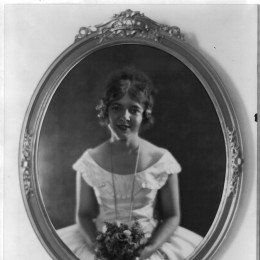 Enlarge Image
Helen Hayes was an American actress whose career extended from childhood theater to Broadway, film, television and spoken-word recordings. Frequently called the First Lady of the American Theatre, she won competitive Emmy, Grammy, Oscar and Tony awards. Alongside performing and writing, she supported rehabilitation services and joined Lady Bird Johnson in establishing a center devoted to native plants.
Explore Related Biographies
Selected for this profile
People Mentioned in This Biography
Early life and Broadway beginnings
Born Helen Hayes Brown in Washington, D.C., on October 10, 1900, she began acting as a child. Her early Broadway credits include Old Dutch, which opened in 1909, and The Never Homes in 1911. The Broadway League's Internet Broadway Database documents her progression from these juvenile appearances into a long adult stage career.
Hayes appeared in Bab in 1920 and later built a repertory that included Mary of Scotland, Victoria Regina and Harriet. These historical and dramatic roles helped establish her reputation beyond the child parts with which she began. Theatre Washington's career account also records tours, classical theater and her later work with the APA Phoenix Repertory Company.
Tony Awards and stage work
She won a Tony for Happy Birthday in 1947, the awards' inaugural year, and another for Time Remembered in 1958. A 1970 nomination recognized her performance in Harvey. In 1980 she received the Lawrence Langner Memorial Award, a special Tony honor. The Broadway League's record distinguishes those competitive wins, nomination and lifetime recognition.
Her stage career continued into the early 1970s. She appeared in a Washington production of Long Day's Journey Into Night in 1971, returning to the city where her performing life had begun. The range of her credits, from comedy to historical drama and repertory productions, makes her career broader than any single signature role.
Movies, television and the EGOT
Hayes' screen work brought two Academy Awards: leading actress for The Sin of Madelon Claudet, a 1931 film, and supporting actress for Airport, released in 1970. The Academy's records list her wins for Madelon Claudet and Airport. The performances came almost four decades apart, illustrating the length of her screen career alongside her stage work.
Television provided another sustained outlet. The Television Academy records a 1953 Best Actress Emmy and later nominations for productions including The Snoop Sisters, Do Not Fold, Spindle or Mutilate and A Family Upside Down. These credits show her continuing presence as television drama changed formats over several decades.
In 1977 she shared the Grammy for Best Spoken Word Recording for Great American Documents with Orson Welles, Henry Fonda and James Earl Jones. The Recording Academy's award record verifies that collaboration. With wins across the four major entertainment awards, Hayes belonged to the group now commonly described as EGOT winners.
Family, books and public service
Hayes married playwright and screenwriter Charles MacArthur in 1928. They had a daughter, Mary, and adopted a son, James MacArthur, who also became an actor. Her writing offered another way to reflect on work and life: her books included A Gift of Joy, On Reflection and My Life in Three Acts.
Her long association with the institution now called Helen Hayes Hospital began in the 1940s. She joined its Board of Visitors in 1944 and advocated for people receiving rehabilitation care. The hospital's history describes that continuing commitment and its decision to name the institution in her honor.
In 1982, Hayes and Johnson founded the National Wildflower Research Center in Austin. The Wildflower Center's institutional history identifies both founders and traces its later development into the Lady Bird Johnson Wildflower Center. The project linked Hayes' interest in gardening with research and public education about native plants.
Death and lasting recognition
Hayes died in Nyack, New York, on March 17, 1993, aged 92. Her name remains associated with Broadway theaters and the Washington-area Helen Hayes Awards. Those institutions commemorate a career that crossed several performing media while also including sustained work beyond the stage and screen.
Portrait credit
Photo: Mary Dale Clarke, November 23, 1921, Library of Congress collection via Wikimedia Commons. Public domain in the United States. Existing historical photoprint and border preserved; downloaded Commons 960px resized derivative. No further image editing before upload. Bijog may resize the image and crop thumbnails.