Henry Kissinger
Edit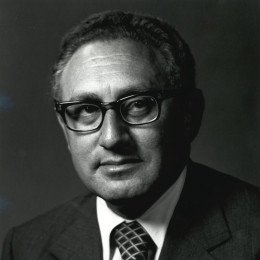 Enlarge Image
Henry Kissinger was a German-born American diplomat, scholar and author who served as national security adviser from 1969 to 1975 and secretary of state from 1973 to 1977. His work helped reshape Cold War diplomacy, while his involvement in military escalation and support for authoritarian governments left a deeply contested record.
Explore Related Biographies
Selected for this profile

People Mentioned in This Biography
Early life, immigration and Harvard education
Born Heinz Alfred Kissinger on May 27, 1923, in Fürth, Germany, he came from a Jewish family that fled Nazi persecution for New York in 1938. He became an American citizen in 1943 and served in the U.S. Army during the Second World War. The University of Virginia Miller Center's biography traces his military service and subsequent academic career.
Kissinger earned a bachelor's degree at Harvard in 1950 and a doctorate in 1954. He taught at the university and developed an approach to international affairs associated with realism: attention to national interests, power and the constraints facing governments. Harvard's account of his life and intellectual influence describes both this academic formation and the disputes surrounding its application in government.
National security adviser and secretary of state
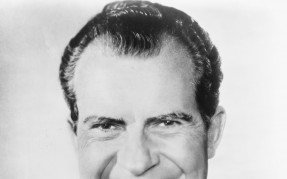
Richard Nixon brought Kissinger into the White House as national security adviser in January 1969. He became secretary of state in September 1973 while retaining his White House position. The State Department's official biography identifies him as the first person to hold both posts simultaneously.
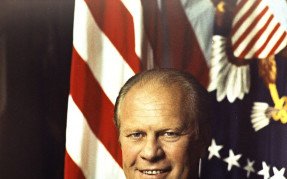
After Nixon resigned in August 1974, President Gerald Ford kept Kissinger in both roles. Ford replaced him as national security adviser in November 1975, but Kissinger remained secretary of state until January 20, 1977.
China, détente and Middle East diplomacy
Kissinger's confidential talks in Beijing in 1971 helped prepare Nixon's visit to China the following year. The State Department's history of the opening to China explains how secret contacts and public exchanges reduced decades of hostility. The 1972 visit produced the Shanghai Communiqué; full diplomatic normalization followed later, in 1979.
He also worked on détente with the Soviet Union. This effort combined negotiation with continued strategic rivalry. The official history of détente and arms control places the 1972 Antiballistic Missile Treaty and interim strategic-arms agreement within that broader attempt to manage nuclear competition.
After the October 1973 Arab-Israeli War, Kissinger traveled repeatedly between Middle Eastern capitals to negotiate military disengagement. The State Department's account of shuttle diplomacy records Egyptian-Israeli and Syrian-Israeli agreements in 1974 and a second Egyptian-Israeli agreement in 1975. These were incremental arrangements separating forces, rather than a comprehensive regional peace settlement.
Vietnam negotiations and the Nobel Peace Prize
Kissinger conducted private negotiations with North Vietnamese representative Le Duc Tho while the Nixon administration pursued troop withdrawals, Vietnamization and military pressure. The Paris agreement signed in January 1973 enabled American withdrawal and the return of U.S. prisoners of war. As the State Department's Vietnam history makes clear, fighting continued after the agreement; the war ended in 1975.
Kissinger and Le Duc Tho were jointly awarded the 1973 Nobel Peace Prize for negotiating a ceasefire. Tho declined it. The Norwegian Nobel Institute's account also records the controversy over the award and the resignation of two Nobel Committee members in protest.
Cambodia, Chile and criticism of his policies
The diplomatic achievements were accompanied by policies with grave human consequences. The National Security Archive's collection of declassified records includes Kissinger's transmission of Nixon's orders for secret bombing in Cambodia in March 1969. It also documents efforts to undermine Salvador Allende's elected government in Chile and Kissinger's supportive remarks to military ruler Augusto Pinochet in 1976, despite advisers' warnings about human-rights violations.
Assessments of Kissinger's legacy differ sharply. In Harvard's retrospective, political scientist Joseph Nye credited the China opening, Soviet arms-control diplomacy and Middle East negotiations, while criticizing the human costs of policies in Vietnam, Cambodia, Chile and Bangladesh. Historian Fredrik Logevall likewise argued that a focus on great-power competition led Kissinger to neglect human rights.
Books, later work and death
After government service, Kissinger continued writing and consulting through Kissinger Associates. His books included Diplomacy, a historical study of international relations, and Leadership: Six Studies in World Strategy, published in 2022. The latter examined leaders he had known, including Nixon, Anwar Sadat and Margaret Thatcher.
Kissinger died on November 29, 2023, aged 100. The Council on Foreign Relations' memorial confirmed his death and recalled his long association with the organization.
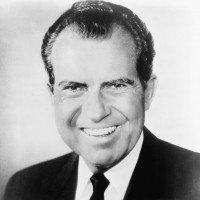
Portrait: United States Department of State official photograph, dated 1973–1977; individual photographer unidentified. Original file and rights record. Public domain in the United States: U.S. federal government work. No editorial image alteration; website resizing and thumbnail cropping.