Joan Baez
Edit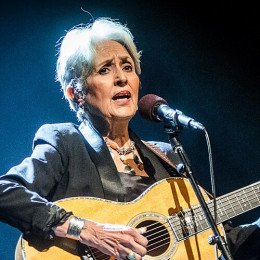 Enlarge Image
Joan Baez is an American singer, songwriter, artist and activist associated with the folk revival and movements for civil rights, peace and human rights. Her recordings range from traditional ballads to contemporary songs, including her own “Diamonds & Rust.” Alongside performing, she has developed work in painting and writing.
Explore Related Biographies
Selected for this profile
People Mentioned in This Biography
Early life and the folk revival
Joan Chandos Baez was born on January 9, 1941, in Staten Island, New York. Her father, Albert Baez, was a physicist born in Mexico, and her mother, Joan Bridge Baez, was from Scotland. The National Women's History Museum describes her Quaker upbringing and the importance of pacifism within her family.
After moving to the Boston area, she briefly attended Boston University and became part of the Cambridge coffeehouse scene. Folk musician Bob Gibson invited her to appear at the Newport Folk Festival in 1959. Her self-titled debut album followed on Vanguard Records in 1960, bringing her interpretations of traditional material to a national audience.
Songs, recordings and fellow musicians
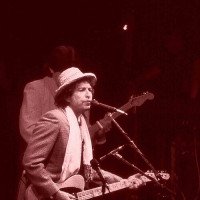
Baez became an important interpreter of contemporary songwriting as well as older folk songs. Her career intersected with Bob Dylan's in the early 1960s, when she performed with him and recorded his work. Her repertoire subsequently moved across folk, country and popular music, while her own compositions became part of other singers' repertoires.
That exchange includes Judy Collins's recording of “Song for David.” Collins's official liner notes for Whales and Nightingales credit Baez as its writer. Released in 1970, the album places her song alongside material by several other writers from the wider folk community.
Baez's own “Diamonds & Rust,” released in 1975, became a signature composition. Her recordings also included “The Night They Drove Old Dixie Down,” demonstrating a repertoire that extended beyond the traditional ballads of her earliest albums. Songwriting and interpretation remained complementary parts of her musical identity.
Activism and public recognition
Her public work has consistently included nonviolent activism. She sang at the 1963 March on Washington and supported the civil rights movement, later participating in campaigns against the Vietnam War and for human rights. The California Museum's induction biography documents those activities and her association with causes including farmworkers' rights and Amnesty International.
Baez received a Grammy Lifetime Achievement Award in 2007. The Rock & Roll Hall of Fame inducted her in 2017 in its performer category, recognizing a folk career whose influence crossed musical genres. These honors accompanied decades of recording, touring and advocacy.
Writing and work beyond touring
After concluding her formal farewell tour in 2019, Baez continued making and discussing art. Her poetry collection When You See My Mother, Ask Her to Dance appeared in 2024. In a conversation with Diane Rehm for PBS, she discussed the move into publicly sharing her poetry.
In a September 2026 interview for KQED's Forum, she discussed the evolution of her voice and artists' role in activism. The appearance continued a public conversation connecting her music with social causes after the end of her formal farewell tour.
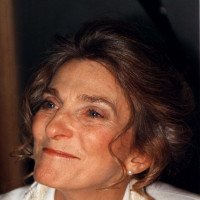
Portrait credit: Jim Gilbert / Jtgphoto, Joan Baez at The Egg in Albany, New York, March 25, 2016. Licensed CC BY-SA 4.0. Existing Commons crop by FMSky, resized for display. The image and its resized versions are shared under the same license. Original file and attribution; reuse terms.