Larry Parks
Edit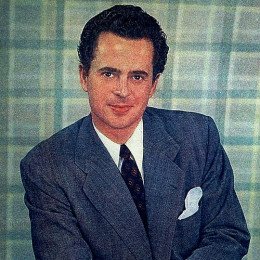 Enlarge Image
Larry Parks was an American stage and film actor best known for portraying entertainer Al Jolson in The Jolson Story and Jolson Sings Again. The first performance brought him an Academy Award nomination. His screen career was subsequently disrupted by the Hollywood blacklist, although he continued working in theater and television and appeared in later films.
Explore Related Biographies
Selected for this profile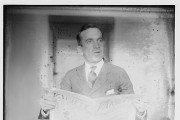
People Mentioned in This Biography
Early life and studio work
Parks was born on December 13, 1914, in Olathe, Kansas. By the early 1940s he was working in Hollywood features, taking supporting parts before becoming a leading player. TV Insider’s biographical summary describes his early work in lower-budget productions and the major change in his career when he was cast as Jolson.
The Jolson Story and an Oscar nomination
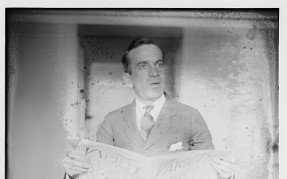
In The Jolson Story, Parks portrayed Al Jolson, combining his screen performance with Jolson’s recorded singing. The AFI’s production history documents the film’s development, cast and musical presentation. The role required Parks to represent the stage manner and public identity of a performer already familiar to American audiences.
He was nominated for best actor at the 1947 Academy Awards. The film also received nominations in several other categories and won for its musical scoring and sound recording. The nomination marked a major advance from his earlier supporting parts.
The Jolson films also reproduced blackface performance, a theatrical tradition rooted in racist caricature. The Smithsonian’s history of blackface provides context for understanding that material. This history belongs alongside discussion of the films’ popularity and their significance to Parks’s professional advancement.
The sequel and other leading roles
Parks reprised his role in Jolson Sings Again. The AFI’s sequel entry records his return as the singer and the continuation of the screen biography. Together, the two pictures became the performances most closely identified with his name.
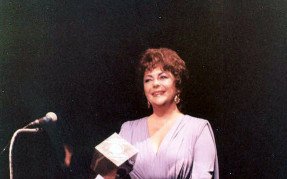
His other work included Love Is Better Than Ever, a romantic comedy opposite Elizabeth Taylor, released in 1952. The AFI catalog identifies Stanley Donen as director and records location filming in New York in 1950. Its production history helps distinguish work already completed from the employment difficulties that followed his political testimony.
HUAC testimony and the Hollywood blacklist
In 1951, Parks testified before the House Committee on Un-American Activities about his former Communist Party membership. He initially resisted identifying other members, then supplied names in a private session. The National Humanities Center’s seminar materials reproduce portions of his testimony and describe the blacklisting that followed despite his cooperation.
The impact extended to his wife and fellow performer Betty Garrett. In her Television Academy oral history, Garrett discusses the restrictions the blacklist placed on their careers. The academy’s interview index for Parks also records recollections of the couple’s stage and television work, showing that their performing lives continued beyond the loss of major studio opportunities.
Later films and death
Parks appeared in John Huston’s Freud (1962), playing Dr. Joseph Breuer alongside Montgomery Clift and Susannah York, as the AFI’s film record confirms. He died on April 13, 1975, aged 60. His career remains part of both Hollywood musical history and the record of how political blacklisting affected performers and their livelihoods.
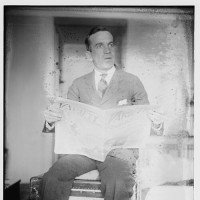
Portrait: New York Sunday News, individual photographer uncredited, portrait published August 10, 1947. Public domain in the United States: copyright not renewed. Existing Commons crop, automatic correction and brightening by Renamed user 995577823Xyn; resized derivative; no additional local alteration; site thumbnails may be cropped. Original Commons file page; public-domain copyright-renewal evidence.