Martin Luther King Jr.
Edit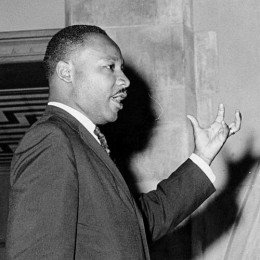 Enlarge Image
Martin Luther King Jr. was an American Baptist minister and civil rights leader who advocated nonviolent action against racial segregation and discrimination. His leadership extended from the Montgomery bus boycott to campaigns for voting rights, economic justice and peace. He received the Nobel Peace Prize in 1964 and was assassinated in Memphis in 1968.
Explore Related Biographies
Selected for this profile
People Mentioned in This Biography
Early life, education and family
King was born on January 15, 1929, in Atlanta, Georgia. He grew up in a family closely connected to the Baptist ministry. His older sister, Christine King Farris, later recalled their childhood in My Brother Martin. The publisher’s description presents her account of the experiences and family values that preceded his public career.
He graduated from Morehouse College in 1948, completed his studies at Crozer Theological Seminary in 1951 and earned a doctorate in systematic theology from Boston University in 1955. Boston University’s archival account traces his education and developing vocation. He married Coretta Scott in 1953 and became pastor of Dexter Avenue Baptist Church in Montgomery, Alabama, in 1954.
Montgomery and the Southern Christian Leadership Conference
Following Rosa Parks’s arrest in December 1955, Montgomery’s Black community organized a boycott of segregated city buses. King became president of the Montgomery Improvement Association and a leading public voice of the campaign. Its success helped establish him as a national figure while demonstrating the organizing power of churches, local activists and sustained nonviolent protest. The King Institute’s historical introduction traces this transition from local minister to national leader.
In 1957 he became founding president of the Southern Christian Leadership Conference. The Stanford King Institute’s organizational history describes how SCLC connected local campaigns across the South. His approach drew on Christian ethics and the example of Mahatma Gandhi, combining public persuasion, civil disobedience and grassroots organization.
Birmingham, the March on Washington and voting rights
During the 1963 Birmingham campaign, King was jailed after participating in demonstrations. He composed Letter from Birmingham Jail in response to criticism from local clergy. The King Institute’s account of the letter explains its defense of direct action and its challenge to the argument that civil rights protesters should wait for change.
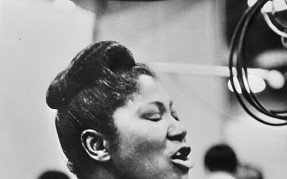
On August 28, 1963, King delivered his I Have a Dream speech at the March on Washington for Jobs and Freedom. Gospel singer Mahalia Jackson performed before his address, linking the march’s political demands with its musical and religious traditions. The institute’s study of the musical program documents her participation.
King received the 1964 Nobel Peace Prize. He subsequently helped lead the 1965 Selma voting rights campaign. The National Park Service’s history places these campaigns alongside the wider struggle that helped secure the Civil Rights Act of 1964 and Voting Rights Act of 1965. These achievements involved many organizations and local participants as well as nationally recognized leaders.
Later campaigns, assassination and legacy
In his final years King expanded his attention to poverty and opposition to the Vietnam War. His understanding of nonviolence connected racial equality with economic conditions and international conflict. The King Center’s biographical overview describes that broader commitment and the continuing influence of his speeches and writings.
King was assassinated on April 4, 1968, while in Memphis to support striking sanitation workers. He was 39. The National Park Service’s historical answers record the date, place and circumstances. A federal holiday and national memorial honor his life and work.
His public career continues to be examined through scholarship, family memoirs and film. The 2014 drama Selma, directed by Ava DuVernay, portrays the voting rights campaign. Paramount’s film record identifies David Oyelowo as King and locates the story in the Selma-to-Montgomery movement. These later interpretations form part of the continuing discussion of his historical role.
Portrait: Cleveland Plain Dealer, individual photographer uncredited; King speaking in Cleveland, May 14, 1963. Public domain in the United States: copyright not renewed. Existing Commons crop and automatic correction by Renamed user995577823Xyn; resized derivative; site thumbnails may be cropped. Original Commons file page; public-domain license evidence.