Martha Graham
Edit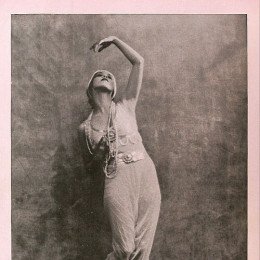 Enlarge Image
Martha Graham (May 11, 1894–April 1, 1991) was an American dancer, choreographer and teacher who helped establish modern dance as a major performing art. Her career brought together a distinctive movement technique, an influential company and works that made emotion central to theatrical movement. The Library of Congress’s research guide places her among the artists who transformed twentieth-century dance.
Explore Related Biographies
Selected for this profile

People Mentioned in This Biography
Early life and dance training
Graham was born in Allegheny, Pennsylvania. According to the Library of Congress chronology, she began studying with Ruth St. Denis and Ted Shawn at their Denishawn School in 1916 and was teaching there by 1918. She subsequently performed with Denishawn before appearing in the Greenwich Village Follies in the 1920s.
Her first independent concert took place on April 18, 1926, at New York’s 48th Street Theater. That transition from performing within other artists’ productions to presenting her own concert marked an important step in building an independent choreographic career.
The Graham technique and dance company
In 1926, Graham founded her company and school. The company’s official history describes their beginnings in a small Carnegie Hall studio. Her experiments with contraction and release developed into a system through which dancers could communicate intense feeling. Angular shapes and forceful, direct movement became part of a vocabulary that gave psychological experience a physical form.
Her interests extended beyond one subject or setting. American life, painting and Greek mythology supplied material for her choreography, including roles built around women from myth and history. Graham also conceived dance in relation to costumes, music and the stage environment, bringing collaborators into the development of a complete theatrical work.
Lamentation and Appalachian Spring
One of her best-known solos, Lamentation, premiered in 1930. The official repertory account describes a performer seated for much of the dance inside a tube of purple fabric. The stretching cloth and the dancer’s restricted movement make grief visible through the body. Its music is by Zoltán Kodály, and its concentrated staging shows how much Graham could communicate with a single performer.
Appalachian Spring introduced a different setting and scale. It premiered at the Library of Congress on October 30, 1944, with music by Aaron Copland. The Library’s account of the ballet’s creation traces the collaboration behind the production, including Graham’s contribution of its initial story and scenario. Together, these works offer two useful entry points into her career: an intimate solo and an ensemble ballet created through collaboration.
Teaching, honors and legacy
Graham’s influence reached artists beyond her own company. The Television Academy records that writer and performer Maya Angelou studied with Graham during Angelou’s dance career. That connection places her teaching within a wider history of American performance.
Graham received the Presidential Medal of Freedom in 1976 and the National Medal of Arts in 1985. She died on April 1, 1991, aged 96. Her company and school continue to carry her work into performance and training, while new generations encounter the technique and repertory she developed.
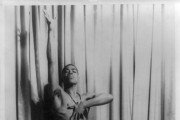
Portrait credit: Nickolas Muray, 1922, published in Shadowland. Image source and publication information; public domain in the United States. Full composition resized; no intentional cropping or colorization.