Walter Cronkite
Edit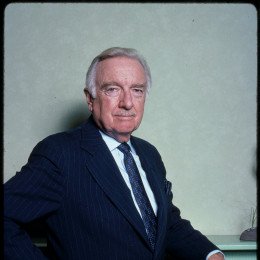 Enlarge Image
Walter Cronkite was an American journalist and broadcaster who anchored the CBS Evening News from 1962 to 1981. His reporting brought major events of the twentieth century into American homes, from presidential elections and the Vietnam War to the Apollo Moon landings. He was also the program's managing editor.
Explore Related Biographies
Selected for this profile


People Mentioned in This Biography

Early life and journalism
Walter Leland Cronkite Jr. was born on November 4, 1916, in St. Joseph, Missouri. He spent part of his childhood in Kansas City before his family moved to Houston. School-newspaper work helped develop his interest in reporting, and he later attended the University of Texas at Austin.
He left university to work in journalism rather than completing a degree. The State Historical Society of Missouri's biography traces his early newspaper and radio work and the practical experience that preceded his national broadcasting career.
War correspondent and CBS anchor
During World War II, Cronkite reported from Europe for United Press. His assignments included wartime reporting and the Nuremberg trials, followed by work in the news agency's postwar Moscow bureau. The American Antiquarian Society, of which he became a member, records these parts of his career.
Cronkite joined CBS in 1950 and worked on news and documentary programs before taking over its evening newscast in 1962. The broadcast expanded from fifteen minutes to half an hour the following year. His years at the anchor desk encompassed political conventions, elections, the assassination of President John F. Kennedy and the Watergate scandal.
Apollo and space reporting
Cronkite developed a particular interest in the American space program. He reported from launch sites and devoted extensive broadcast time to explaining missions and their significance. NASA's account of his work recalls his enthusiasm for Apollo and his long hours on air during the first lunar landing.
His coverage combined technical explanation with the immediacy of watching events unfold. NASA records that he was on air for 27 out of 30 hours during critical phases of the Apollo 11 landing, surface activity and return to lunar orbit.
Sign-off, retirement and honors
His closing phrase, “And that's the way it is,” became a familiar part of the evening broadcast. The Television Academy identifies that sign-off with his career and records his induction into its Hall of Fame in 1985.
Cronkite left the CBS Evening News anchor chair in 1981 but continued working on special programs and documentaries. He received the Presidential Medal of Freedom that year. Arizona State University's journalism school also bears his name, reflecting his association with the profession beyond his own broadcasts.
Faith and Freedom Award and legacy
Cronkite supported Interfaith Alliance, which established its Walter Cronkite Faith and Freedom Award in 1998. The organization's history describes his role as a spokesperson. Its 2010 annual financial report records recipients including Rachel Maddow and the Rev. Joan Brown Campbell.
Cronkite died on July 17, 2009, aged 92. His career remains closely associated with the development of network television news and the task of explaining complex events to a national audience.
Portrait: Bernard Gotfryd / Library of Congress, Walter Cronkite, November 1983. The Library's rights advisory states no known restrictions on publication. Original Library of Congress JPEG; resized for display.