Wolfgang Amadeus Mozart
Edit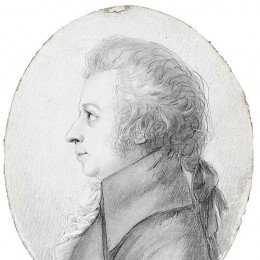 Enlarge Image
Wolfgang Amadeus Mozart was a composer and keyboard performer of the Classical period. His works span opera, symphonies, concertos, chamber music and sacred music. Born in Salzburg on January 27, 1756, he developed from a touring child musician into a composer whose mature career was centred in Vienna.
Explore Related Biographies
Selected for this profile


People Mentioned in This Biography

Family and early musical training
Mozart and his older sister Maria Anna, known as Nannerl, received musical instruction from their father Leopold, himself a composer and violinist. The children performed at European courts while Wolfgang increasingly presented compositions of his own. The Mozarteum Foundation's family history documents their extended journey through places including Paris, London and The Hague between 1763 and 1766.
His musical education grew through travel, performance and contact with different traditions. A scholarly biography published by King's College London's Mozart and Material Culture project distinguishes his early touring years from his later employment at the Salzburg court and his independent career in Vienna. It also places the works alongside the circumstances in which they were commissioned and performed.
Salzburg, Vienna and the operas
Mozart worked in Salzburg during much of the 1770s, with journeys elsewhere for performances and commissions. He moved to Vienna in 1781, where he taught, performed and composed. The shift created the setting for many of his best-known mature works.
The Royal Ballet and Opera biography traces his operatic career from early commissions in Italy through Idomeneo and Die Entführung aus dem Serail. His collaborations with librettist Lorenzo da Ponte produced The Marriage of Figaro in 1786, Don Giovanni in 1787 and Così fan tutte in 1790. These operas combine ensemble writing with characters whose conflicting aims drive the drama.
His final year brought La clemenza di Tito and The Magic Flute. The latter was written for Vienna's popular theatre and became one of his most familiar stage works. Mozart's music also extended far beyond opera: the University of Alberta's Wirth Institute presents a listening survey including his final symphonies, piano concertos, clarinet concerto and chamber music.
Death and the unfinished Requiem
Mozart died in Vienna on December 5, 1791, aged 35, leaving his Requiem unfinished. The Mozarteum Foundation explains that the precise cause of his final illness remains uncertain. His burial followed the customs and regulations of the time; the foundation cautions against the familiar claim that it was a pauper's burial.
Performance and screen legacy
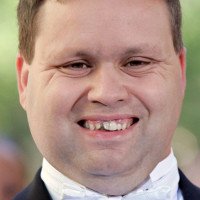
Mozart's operas remain a source of roles for later singers. Bath Opera's 2003 cast biography of Paul Potts records Potts performing Don Basilio in The Marriage of Figaro and Don Ottavio in Don Giovanni. It provides a documented link between Mozart's eighteenth-century music and a singer later known to television audiences.
Mozart has also been portrayed on screen. Tom Hulce played him in the 1984 film Amadeus and received an Academy Award nomination for the performance. The producer's official film record identifies Peter Shaffer's play as its source and describes it as an imaginative drama based on history. Its depiction of Mozart and Antonio Salieri should be understood in that dramatic context.
Portrait credit: Dora Stock. 1789. Original portrait and reuse information. Public domain. Historical silverpoint portrait drawn during Mozart’s lifetime, reproduced from Wikimedia Commons. Resized preview and automatic site thumbnail crop.