
Andrew Carnegie
Edit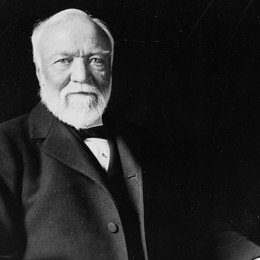 Enlarge Image
Andrew Carnegie was a Scottish-American industrialist, businessman, and philanthropist, widely recognized for his transformative impact on the steel industry and his substantial philanthropic legacy. Born on November 25, 1835, in Dunfermline, Scotland, Carnegie came from humble beginnings. His parents, Margaret Morrison Carnegie and William Carnegie, raised him in a modest one-room cottage. He attended the Free School in Dunfermline and helped his mother sell potted meats to supplement the family's income.
Quick Facts
- Birth Date
- 25 Nov, 1835
- Age
- 184 yrs
- Citizenship
- United States of America
Show all facts
- Birth Place
- Dunfermline
- Gender
- Male
- Description
- American businessman and philanthropist
- Spouse
- Louise Whitfield Carnegie
- Net Worth 2021
- 310 billion
Explore Related Biographies
Selected for this profile


Immigration to America and Early Employment
In 1848, seeking better economic opportunities, the Carnegie family immigrated to Allegheny, Pennsylvania, in the United States. Andrew and his father initially worked at Anchor Cotton Mills, a Scottish-owned cotton factory. At just 13 years old, Carnegie worked as a bobbin boy, changing spools of thread in the mill. He toiled 12 hours a day, six days a week, earning only $1.20 per week.
In 1849, he secured a position as a telegraph messenger for the Ohio Telegraph Company in Pittsburgh. This role exposed him to influential individuals and laid the foundation for crucial business connections that would later benefit his career. Carnegie's work ethic and ambition gained the attention of prominent figures in the railroad and telegraph industries.
Rise in Business and Investment Ventures
Carnegie's financial prospects improved notably when he was given the opportunity to invest in Theodore Tuttle Woodruff's sleeping car company. This venture marked the beginning of his journey into strategic investments and capital accumulation. In 1864, he invested $40,000 in an oil venture on Story Farm in Venango County, Pennsylvania. Within a year, the investment yielded significant returns—reportedly generating over $1 million in cash dividends, a major milestone in Carnegie's wealth-building trajectory.
Carnegie Steel and Industrial Success
Carnegie ultimately directed his focus to the burgeoning steel industry, where he built an empire that became synonymous with American industrialization. He founded Carnegie Steel Company, which revolutionized steel production in the United States through innovative practices such as vertical integration. His enterprise played a vital role in shaping the nation’s infrastructure during the late 19th century, contributing to the construction of railroads, bridges, and skyscrapers.
Philanthropy and Personal Life
Having amassed a vast fortune, Carnegie dedicated the latter part of his life to philanthropy. Guided by his belief in the "Gospel of Wealth," he donated over $350 million to causes that promoted education, peace, and scientific research. His contributions included the founding of public libraries, Carnegie Mellon University, and the Carnegie Institution for Science.
In 1887, Carnegie married Louise Whitfield. The couple had one daughter, Margaret, named in honor of his mother. Carnegie spent his later years in philanthropy and writing, advocating for global peace and cooperation. He passed away on August 11, 1919, in Lenox, Massachusetts, leaving behind a legacy defined by industrial innovation and altruistic vision.