Ferde Grofé
Edit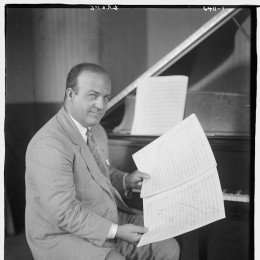 Enlarge Image
Ferde Grofé was an American composer, arranger, pianist and conductor best known for Grand Canyon Suite and his orchestration of Rhapsody in Blue. He worked with Paul Whiteman's orchestra before pursuing a career that included concert suites, broadcasting, teaching and film music. His work connected the sound of the dance band with the resources of the symphony orchestra.
Explore Related Biographies
Selected for this profile
People Mentioned in This Biography
Early Life and Musical Training
Grofé was born Ferdinand Rudolph Grofé in New York City on March 27, 1892. He came from a family of professional musicians and grew up largely in California. His training included piano and string instruments, providing a practical knowledge of how different instrumental parts fit together.
The Library of Congress's collection record identifies him as a composer, arranger, conductor and pianist. Its finding aid records a decade as a violist with the Los Angeles Symphony Orchestra, beginning in 1909. Alongside orchestral work, he played popular music and developed his skill at arranging for smaller groups.
Paul Whiteman and Rhapsody in Blue
By the early 1920s, Grofé was working as pianist and arranger for Paul Whiteman. The job required more than writing down a melody: an arranger allocated musical material among instruments, shaped textures and prepared parts suited to the particular players in the ensemble.
His most famous assignment grew out of Whiteman's commission to George Gershwin. For the first performance of Rhapsody in Blue at New York's Aeolian Hall on February 12, 1924, Gershwin played piano and Whiteman conducted. Grofé prepared the orchestral accompaniment for Whiteman's band.
A Library of Congress examination of the manuscripts shows how the piece developed through drafts and Grofé's scoring decisions. The distinction between the two musicians' work matters: Gershwin composed Rhapsody in Blue, while Grofé supplied its original orchestration. His contribution helped determine how that first audience heard the music.
Grand Canyon Suite and Landscape Music
Grofé also established an identity as a composer in his own right. Works such as Mississippi Suite and Grand Canyon Suite used orchestral music to suggest American places and scenes. They brought his experience with instrumental color into a form that could be heard in the concert hall.
Grand Canyon Suite premiered in Chicago on November 22, 1931, with Whiteman. The five-movement work became Grofé's best-known composition. Florida State University's account notes that he later rescored it for full orchestra in 1934, and identifies that version as important to its continuing popularity.
The Songwriters Hall of Fame's biography places the suite within a longer series of works inspired by American landscapes and public occasions. Later titles included Hudson River Suite, Niagara Suite and World's Fair Suite.
Teaching, Songs and Film Scores
Grofé led his own orchestra and taught orchestration at the Juilliard School. The Dallas Symphony's educational biography emphasizes the breadth of his working life, from bar pianist and accompanist to orchestral player, teacher and conductor. These were overlapping parts of his musical career.
He also worked in popular song and Hollywood. With lyricist Harold Adamson he collaborated on Daybreak. His film work brought an Academy Award nomination: the Academy's 1945 record names Grofé and Leo Erdody together for scoring Minstrel Man. This was a nomination rather than an Oscar win.
Death and Musical Archives
Grofé died in Santa Monica, California, on April 3, 1972, aged 80. He had been inducted into the Songwriters Hall of Fame in 1970. Manuscripts, arrangements and other papers survive at the Library of Congress, while Florida State University holds an audio collection containing 144 reels and 47 cassettes, including live performances. These collections document both his original compositions and the arranging work central to his career.
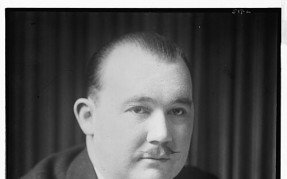
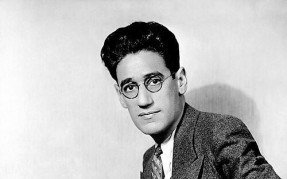
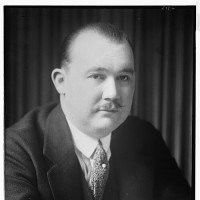
Portrait credit: Bain News Service, publisher; unidentified photographer. Library of Congress, LC-DIG-ggbain-38467, undated (no date recorded on caption card). Original catalogue and rights advisory; Wikimedia Commons file and rights information. Public domain (PD-Bain); the Library reports no known restrictions on publication. Public Domain Mark 1.0. Library JPEG derivative; no additional cropping or retouching.