Paul Whiteman
Edit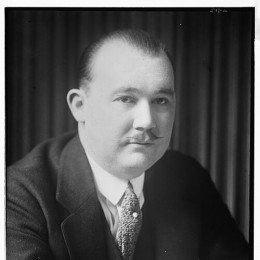 Enlarge Image
Paul Whiteman was an American bandleader, violist and broadcasting figure whose orchestra became one of the leading commercial ensembles of the 1920s. He commissioned and conducted the first performance of Rhapsody in Blue, with George Gershwin at the piano. Often advertised as the King of Jazz, Whiteman built a career across dance records, concert presentations, film and radio.
Explore Related Biographies
Selected for this profile


People Mentioned in This Biography
Early Life and Musical Training
Paul Samuel Whiteman was born in Denver, Colorado, on March 28, 1890. Music was central to his upbringing: his father worked in public-school music education and his mother was a singer. He learned string instruments and worked as a viola player with the Denver and San Francisco symphony orchestras before becoming a popular-music bandleader.
The Colorado Music Hall of Fame's biography traces his move from orchestral playing to leading a Navy ensemble during World War I. After the war he developed his own dance orchestra on the West Coast, then moved into the New York entertainment market in 1920.
Whispering and the Paul Whiteman Orchestra
Whiteman's orchestra relied on carefully prepared arrangements and a large palette of instrumental sounds. It was a commercial dance ensemble as well as a setting for prominent jazz musicians and singers. Its records helped bring this polished orchestral approach to listeners beyond the hotels and ballrooms where the band performed.
Whispering, paired with The Japanese Sandman, was an important early recording. The Smithsonian preserves the Victor disc and dates the recording to 1920. The Recording Academy lists Whispering as a 1998 Grammy Hall of Fame selection. That recognition concerns the historical recording rather than an award Whiteman received during his lifetime.
Rhapsody in Blue
Whiteman organized a concert called An Experiment in Modern Music at New York's Aeolian Hall on February 12, 1924. For it, he commissioned George Gershwin to write a new work. Gershwin performed the solo piano part in Rhapsody in Blue, while Whiteman conducted the orchestra.
Ferde Grofé prepared the original orchestration for Whiteman's particular ensemble. The Library of Congress's centennial concert account distinguishes these roles: Gershwin composed the piece, Grofé scored it for the band, and Whiteman supplied the commissioning and performing organization. The work became a lasting part of Whiteman's public identity.
The nickname King of Jazz was a promotional title. It does not establish Whiteman as the originator of jazz, a form rooted in African American musical traditions. A Library of Congress centennial article also notes the racial limitation of his orchestra's hiring during this period. His commercial success belongs within that wider musical and social history.
Film, Radio and Young Performers
Whiteman's ensembles included musicians such as Bix Beiderbecke, Jack Teagarden and the Dorsey brothers. The Rhythm Boys, featuring Bing Crosby, also sang with him. His band thus offered important early exposure to performers who developed distinct careers of their own.
He appeared with his orchestra in the 1930 film King of Jazz. The National Film Registry's description identifies it as a Technicolor revue containing sketches and musical numbers, including an elaborate presentation of Rhapsody in Blue. Whiteman continued working in radio and later television, and published books about music and bandleading.
Later Life and Recognition
The Michener Art Museum's account records his later connection with the Bucks County region, including residences in Lambertville and Solebury and work supporting local arts and youth activities. Whiteman died in Doylestown, Pennsylvania, on December 29, 1967, aged 77; American National Biography confirms his life dates. He was inducted into the Colorado Music Hall of Fame in 2016.
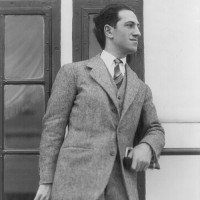
Portrait credit: Bain News Service, publisher; unidentified photographer. Library of Congress, LC-DIG-ggbain-02581, undated. Original catalogue and rights advisory; Wikimedia Commons source. Public domain (PD-Bain); the Library reports no known restrictions on publication. Public-domain information. Resized Commons derivative; no additional retouching.