John Barry
Edit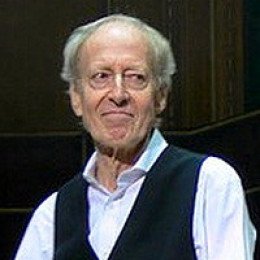 Enlarge Image
John Barry was an English composer, arranger and conductor whose music helped establish the sound of the James Bond films. His work ranged from jazz-influenced action music to expansive orchestral scores and intimate romantic themes. He won five Academy Awards, with films including Born Free, The Lion in Winter, Out of Africa and Dances with Wolves bringing recognition beyond the Bond series.
Explore Related Biographies
Selected for this profile


People Mentioned in This Biography
Early life and the John Barry Seven
Barry was born on November 3, 1933, in York, England. He studied piano, trumpet and musical theory, and grew up around cinemas operated by his family. A United States Marine Band program biography describes that early exposure to film and his work as an army musician. Music and the experience of watching films became closely connected parts of his professional development.
In 1957, he formed the John Barry Seven. The group worked in the setting of touring, television and popular recording before Barry became primarily known as a film composer. His Golden Globes biography places the band at the beginning of a career that later included film scores, television themes and stage work. His background in small-band music remained part of the vocabulary he brought to orchestral writing.
James Bond and the Goldfinger collaborators
Barry arranged and orchestrated Monty Norman’s “James Bond Theme” for Dr. No (1962), the first Bond film starring Sean Connery. He subsequently composed the scores for eleven Bond films. The official franchise’s account of his career distinguishes the original theme arrangement from his later scores. His combination of brass, strings, rhythmic drive and memorable melodies became closely associated with the series.
For Goldfinger (1964), Barry composed both the orchestral score and the title song’s music. Leslie Bricusse and Anthony Newley supplied the lyrics, and Shirley Bassey sang the song. The official soundtrack credits document the collaboration. This division of roles matters when describing a recording that is often discussed together with the instrumental music heard throughout the film.
Born Free and five Academy Awards
Barry won two Oscars for Born Free at the 1967 ceremony: one for its original score and another for the title song, whose lyrics were written by Don Black. The Academy’s ceremony record lists the separate awards. His score for The Lion in Winter, released in 1968, brought another Oscar at the 1969 ceremony.
Out of Africa (1985) and Dances with Wolves (1990) later earned him original-score Oscars at the 1986 and 1991 ceremonies. The latter film was directed by and starred Kevin Costner. These awards reflect the breadth of Barry’s work: the intimate sound of a song, a historical drama and large-scale cinematic landscapes all formed part of his career.
Other scores and later recognition
His work outside Bond included Somewhere in Time, Body Heat and Chaplin. The Golden Globes’ awards record lists nominations across these different films as well as his win for Out of Africa. Their contrasting settings show how his career extended beyond one franchise or a single kind of screen story.
In 2005, Barry received the BAFTA Fellowship. BAFTA’s official record places him among the recipients of its highest honour. The recognition celebrated his overall contribution to film rather than a particular year’s score.
Death and the John Barry scholarship
Barry died on January 30, 2011, in Oyster Bay, New York, aged 77. His widow, Laurie Barry, established the John Barry Scholarship for Film Composition in his memory. A Royal College of Music announcement records the first recipient in 2014 and explains how funds raised after his memorial concert supported study in composition for screen. The scholarship linked the commemoration of his music with training for another generation of composers.
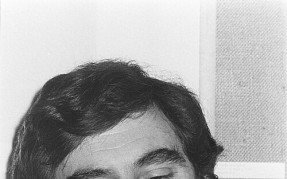
Portrait: Geoff Leonard, John Barry at the Royal Albert Hall, 2006. CC BY-SA 1.0. Existing Commons portrait crop by Impy4ever (2010), with further contrast, crop and sizing changes by Pit rock (2015). No additional local alteration. Site thumbnail crop and other adaptations are available under the same CC BY-SA 1.0 license. Original Commons file page; CC BY-SA 1.0 license.