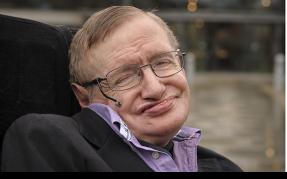
Roger Penrose
Edit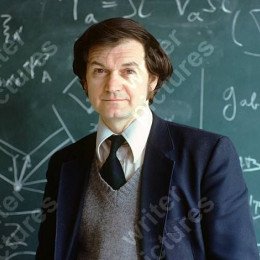 Enlarge Image
Quantum Mechanics and Mathematical Innovations
In addition to his work on general relativity and black holes, Roger Penrose made extensive contributions to quantum mechanics. While at Cambridge, he developed mathematical models using real number systems to explore foundational aspects of quantum theory. He proposed that quantum processes might play a key role in consciousness—an idea elaborated in his later works.
Quick Facts
- Birth Date
- 8 Aug, 1931
- Age
- 88 yrs
- Citizenship
- United Kingdom
Show all facts
- Birth Place
- Colchester
- Education
- University College London
St John's College - Gender
- Male
- Description
- English mathematical physicist, recreational mathematician and philosopher
- Net Worth 2021
- 4 million
Explore Related Biographies
Selected for this profile


People Mentioned in This Biography
Penrose is also celebrated for his discovery of Penrose tiling, a method of tiling a plane using a set of shapes in a non-repeating pattern. This groundbreaking work had significant implications for the study of aperiodic tiling and was later found to have practical applications in materials science, particularly in the study of quasicrystals.
Publications and Science Philosophy
Roger Penrose gained global recognition with the publication of his book The Emperor’s New Mind, which became a bestseller and remains one of the most influential works on modern science and philosophy. In the book, he explored the relationship between consciousness, computing, and physics, presenting thought-provoking critiques of strong artificial intelligence. The book further established him as one of the leading science philosophers of his generation.
Personal Life
According to his biography, Roger Penrose married Joan Isabel Wedge in 1959. The couple had three sons together. After the end of his first marriage, Penrose married Vanessa Thomas, who works as a Director of Academic Development. They have one son together.
Awards and Legacy
Throughout his career, Penrose has received numerous prestigious awards, including the 2020 Nobel Prize in Physics for the discovery that black hole formation is a robust prediction of the general theory of relativity. His collaborative research with Stephen Hawking continues to influence scientific inquiry, and many of his publications, essays, and public lectures are still widely cited and used as educational resources.
Roger Penrose’s legacy as a mathematician, physicist, and philosopher of science continues to inspire students, researchers, and thinkers around the world.