Sergio Leone
Edit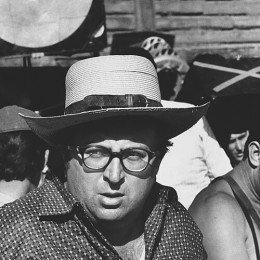 Enlarge Image
Sergio Leone was an Italian film director and screenwriter whose westerns changed the way the American frontier looked and sounded on screen. His films with Clint Eastwood, his collaboration with composer Ennio Morricone and his later crime epic Once Upon a Time in America made him an influential figure in international cinema.
Explore Related Biographies
Selected for this profile

People Mentioned in This Biography

Early life and work in Italian cinema
Born in Rome in 1929, Leone grew up in a filmmaking family. His father, Vincenzo Leone, directed under the name Roberto Roberti; his mother was silent-film actress Edvige Valcarenghi, professionally known as Bice Waleran. He entered the industry as a young man, learning through practical work on other directors' productions. Turner Classic Movies' profile places that apprenticeship within the Italian studios' busy postwar production culture.
Leone worked with Vittorio de Sica on The Bicycle Thief (1948) and gained experience on historical spectacles. He assisted on Hollywood productions made in Italy, including Ben-Hur. His first solo feature as director was The Colossus of Rhodes (1961), a sword-and-sandal adventure that preceded the westerns for which he became best known. The Academy's collection overview traces that progression from apprentice to director.
The Dollars trilogy and Clint Eastwood
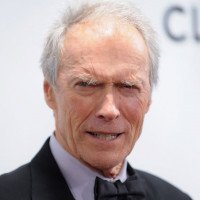
A Fistful of Dollars (1964) gave Leone an international breakthrough. It starred Clint Eastwood, then familiar to television audiences, as a gunman whose restraint and ambiguous motives departed from the reassuring hero of many earlier westerns. For a Few Dollars More (1965) and The Good, the Bad and the Ugly (1966) followed, forming the group commonly called the Dollars trilogy.
These films helped establish the spaghetti western as a major international genre. Spanish locations, an international cast and Italian production methods reshaped stories drawn from American frontier mythology. The Italian Cultural Institute's retrospective emphasizes the mixture of national traditions behind that success. Money, revenge and unstable alliances frequently displaced straightforward moral certainty.
Morricone's scores were central to their identity. Music and widescreen imagery gave confrontations a scale beyond the physical action itself. The partnership became one of the defining features of Leone's career, continuing into his later epics.
Once Upon a Time in the West and Duck, You Sucker!
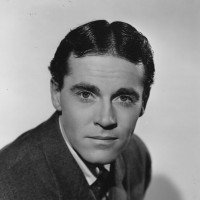
In Once Upon a Time in the West (1968), Leone brought together Charles Bronson, Claudia Cardinale and Henry Fonda. Its story of violence and the coming railroad expanded his examination of the western into an account of a changing world. TCM documents its filming in Monument Valley, Spain and Rome, as well as the cuts made for its American release.
His next directed feature, the 1971 Mexican Revolution film Duck, You Sucker!, paired James Coburn and Rod Steiger. Also released as A Fistful of Dynamite, it brought revolutionary politics into Leone's treatment of friendship, violence and disillusionment. The British Film Institute's account explains its different titles and its place between his two best-known Once Upon a Time films.
Once Upon a Time in America and legacy
Leone's final directed feature was Once Upon a Time in America (1984), a gangster story spanning decades of friendship and betrayal. Its cast included Robert De Niro, James Woods, Elizabeth McGovern and William Forsythe, who played Philip “Cockeye” Stein. The Cinémathèque québécoise's program and cast list document the film and those roles.
Leone died in 1989, aged 60, without completing another feature. His reputation continued to develop through retrospectives, restored releases and filmmakers' reassessments of his work. The range from the compact A Fistful of Dollars to the expansive Once Upon a Time in America shows how a career associated with one genre grew into a broader exploration of memory and American myth.
Portrait credit: unknown photographer, Sergio Leone on the set of A Genius, Two Partners and a Dupe (1975). Original photograph and reuse evidence. Public domain in Italy and the United States, marked PD-Italy and PD-1996. Resized Commons preview; automatic site thumbnail crop.