David Lean
Edit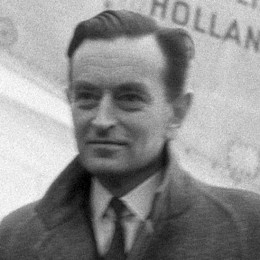 Enlarge Image
David Lean was an English film director and editor whose work ranged from intimate British dramas to large-scale international productions. His films included Brief Encounter, Great Expectations, The Bridge on the River Kwai, Lawrence of Arabia and Doctor Zhivago. He won two Academy Awards for directing and helped establish the institution that became BAFTA.
Explore Related Biographies
Selected for this profile
People Mentioned in This Biography
Early life and work as an editor
Lean was born on March 25, 1908, in Croydon, Surrey, England. He entered the film industry in the late 1920s and worked his way through studio jobs before becoming a film editor. BAFTA’s archive biography identifies editing credits including Pygmalion and 49th Parallel. That experience gave him practical command of how images, performances and sound could be shaped into a story.
His first feature as a director was In Which We Serve (1942), co-directed with Noël Coward. The American Film Institute’s career tribute traces his movement from studio assistant to editor and filmmaker. Coward remained an important early collaborator as Lean developed a directorial career of his own.
Brief Encounter and the Dickens adaptations
Brief Encounter (1945) brought emotional intensity to an ordinary setting, following two married people drawn into a relationship. Lean then adapted Charles Dickens in Great Expectations (1946) and Oliver Twist (1948). The films combined literary storytelling with carefully arranged visual sequences and performances.
Oliver Twist included Anthony Newley as the Artful Dodger. The AFI’s coverage of the film identifies it as Lean’s second Dickens adaptation. The connection also illustrates how his films brought together experienced stage performers and younger screen actors, with Newley later developing a separate career in singing and musical theatre.
The Bridge on the River Kwai and Lawrence of Arabia
The Bridge on the River Kwai (1957) marked a major expansion in the scale of Lean’s work. His direction won an Oscar at the 1958 Academy Awards. The film won seven Oscars overall, including Best Picture.
He won a second directing Oscar for Lawrence of Arabia (1962) at the 1963 ceremony. The film starred Peter O’Toole and Omar Sharif, whose performance as Sherif Ali helped establish his international career. Desert landscapes and large-scale action coexist with the film’s attention to the uncertain identity and motivations of its central character.
Doctor Zhivago and later films
Lean continued with Doctor Zhivago (1965), Ryan’s Daughter (1970) and A Passage to India (1984), his final completed feature. The British Film Institute’s study of place in his films considers how travel, landscape and unfamiliar settings informed his visual imagination. The settings could be expansive while the stories remained focused on individual choices and relationships.
BAFTA, honours and death
Lean was a founding member and early chairman of the British Film Academy. BAFTA made him a Fellow in 1974; he later donated film royalties to the organization’s predecessor, the Society of Film and Television Arts. He was knighted in 1984 and received the American Film Institute’s Life Achievement Award in 1990.
Lean died on April 16, 1991, aged 83, while preparing an adaptation of Joseph Conrad’s Nostromo. His films remain part of repertory cinema: the Irish Film Institute’s account of its 2025 season records a complete retrospective, with almost all titles shown on 35mm or 70mm film. Continued screenings allow audiences to revisit both the intimate dramas and the epics that defined his career.
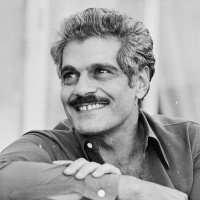
Portrait: Harry Pot / Anefo, David Lean at Schiphol, December 19, 1952, Nationaal Archief collection 905-4605. CC0 1.0. Existing Commons portrait extraction by Alexey2244 (2019), with levels and gamma adjustment by The RedBurn (2025). No additional local alteration. Automatic site thumbnail crop. Original Commons file page; CC0 1.0 public-domain dedication.