Augusto José Ramón Pinochet Ugarte
Edit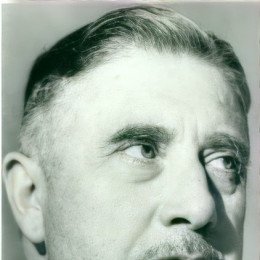 Enlarge Image
Augusto Pinochet was a Chilean army officer and dictator who ruled Chile from 1973 to 1990. He headed the military regime established after the overthrow of President Salvador Allende. His rule transformed the country’s institutions and economy while imposing systematic political repression.
Explore Related Biographies
Selected for this profile


People Mentioned in This Biography
Early life and military career
Augusto José Ramón Pinochet Ugarte was born on November 25, 1915, in Valparaíso, Chile. He entered the military academy in 1933 and graduated as an infantry officer in 1936. The Library of the National Congress of Chile’s biography follows his progression through regimental service, staff training and military teaching.
His professional interests included military geography and geopolitics. In the 1950s he participated in a mission helping organize Ecuador’s war academy. He subsequently held senior command and staff positions in Chile. Allende appointed him commander-in-chief of the army on August 23, 1973, following the resignation of General Carlos Prats.
The coup and consolidation of dictatorship
Less than three weeks later, Pinochet helped lead the September 11 coup against Allende. The armed forces attacked La Moneda, and a junta assumed power. Congress was dissolved and democratic political activity was suppressed. Pinochet emerged as the regime’s dominant figure rather than returning authority to an elected civilian administration.
The National Library of Chile’s account of his rule distinguishes the successive offices through which he consolidated power. He became Supreme Chief of the Nation in June 1974 and took the title president in December that year. A new constitution approved under the dictatorship in 1980 provided a further presidential term beginning in 1981.
Repression and human-rights violations
Political opponents faced detention, torture, killing, forced disappearance and exile. The National Library’s history of human-rights violations describes repression as state policy, carried out through existing security forces and agencies created under the dictatorship, including the DINA and its successor, the CNI. Its account identifies victims among left-wing politicians, trade-union organizers and supporters of the deposed government.
These abuses were also central to disputes about foreign support for the regime. A declassified memorandum of a June 8, 1976 meeting, published by the National Security Archive, records U.S. secretary of state Henry Kissinger offering Pinochet reassurance despite the international criticism of Chile’s human-rights record.
Economic changes and the 1988 plebiscite
The regime introduced extensive market-oriented reforms associated with the economists known as the Chicago Boys. The National Library’s account of this economic programme describes privatization, lower trade barriers, a reduced public sector and changes to pensions and labour institutions. These policies were implemented within an authoritarian political system; economic reform did not bring political freedom.
On October 5, 1988, Chileans voted on whether Pinochet should continue in power. The institutional history of the plebiscite explains the competing Yes and No campaigns. The No vote prevailed, leading to elections and a transition to civilian government. Pinochet transferred the presidency to Patricio Aylwin on March 11, 1990, but retained command of the army until March 1998 and then became a senator for life.
London arrest and later legal proceedings
Police arrested Pinochet in London on October 16, 1998, acting on a Spanish warrant concerning human-rights crimes. Human Rights Watch’s contemporary case archive follows the extradition dispute, his return to Chile on medical grounds in March 2000 and subsequent efforts to remove his parliamentary immunity and prosecute him.
The House of Lords’ March 1999 judgment addressed the limits of former-head-of-state immunity in relation to specific torture allegations and extradition requirements. It was a ruling about whether proceedings could advance, rather than a criminal conviction. Proceedings in Chile later encountered repeated disputes over immunity and fitness to stand trial.
Death and historical legacy
Pinochet died in Santiago on December 10, 2006, aged 91. The National Library’s account of his death notes that he received military honours as a former army commander, without a state funeral as a former president. He died without a criminal conviction, as Associated Press’s retrospective records. His regime’s human-rights violations and the struggle for accountability remain central to its historical assessment.
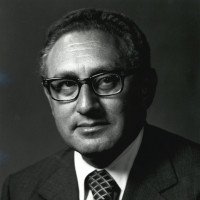
Portrait: Redacción magazine, Argentina, 1974; individual photographer unidentified. Original file and public-domain rights record: PD-AR-Photo and PD-1996, covering Argentina and the United States. Existing Commons version uploaded by Rec79; no additional editorial alteration, with further website resizing and thumbnail cropping.