Salvador Allende Gossens
Edit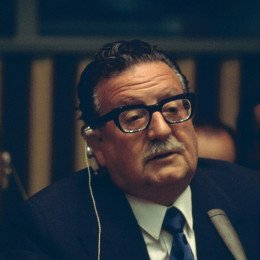 Enlarge Image
Salvador Allende was a Chilean physician and Socialist politician who served as president from 1970 to 1973. His Popular Unity government attempted to build socialism through Chile’s electoral and constitutional institutions. That experiment ended in the military coup of September 11, 1973.
Explore Related Biographies
Selected for this profile
People Mentioned in This Biography
Early life and medical education
Allende was born on June 26, 1908. The Library of the National Congress of Chile’s biography identifies Santiago as his birthplace. His full name was Salvador Allende Gossens. After schooling that included Valparaíso, he entered the University of Chile’s medical faculty in 1926 and trained as a physician.
Medicine and politics developed together in his early career. He worked in public medical services and became interested in the relationship between health and social conditions. The National Library of Chile’s biographical account highlights his work in social medicine and his publication La realidad médico social chilena, which connected medical questions with the circumstances in which people lived.
Socialist Party, Parliament and presidential campaigns
He helped establish Chile’s Socialist Party in 1933 and was elected to the Chamber of Deputies in 1937. Under President Pedro Aguirre Cerda, he served as minister of health, welfare and social assistance. Election to the Senate followed in 1945, beginning a long parliamentary career that continued until he became president.
Allende ran unsuccessfully for president in 1952, 1958 and 1964. He also served as president of the Senate from 1966 to 1969. These decades of campaigning and legislative work made him a prominent representative of Chile’s organized left before the formation of the Popular Unity coalition.
Election in 1970 and the Chilean road to socialism
In September 1970, Allende won the largest share of the presidential vote, approximately 36 percent, without an outright majority. Congress then chose between the leading candidates and confirmed him after negotiations over constitutional guarantees. He took office that November. His victory brought a Marxist politician to the presidency through an established electoral process, attracting international attention during the Cold War.
One major measure was the nationalization of large-scale copper mining. The National Library’s history of copper nationalization records Congress’s unanimous approval of the constitutional amendment on July 11, 1971. This built on earlier Chilean efforts to increase control over an industry central to the country’s exports.
The broader programme expanded state ownership, accelerated agrarian reform and sought to redistribute income. Social initiatives included improvements to hospital equipment, milk distribution for children and wider educational access. However, the institutional history of Popular Unity distinguishes the broad support for copper nationalization from the much sharper disputes surrounding the takeover of other businesses.
Economic crisis and Cold War opposition
The administration faced mounting inflation, shortages, strikes and conflict with opposition parties. Divisions also emerged within the left over how quickly to deepen the reforms. By 1973, political confrontation had severely narrowed the space for compromise. These domestic tensions are essential to understanding the crisis alongside the international pressures on the government.
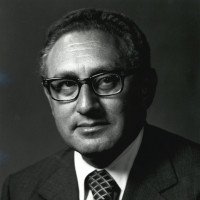
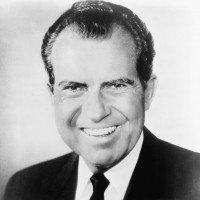
In Washington, President Richard Nixon and national security adviser Henry Kissinger opposed Allende’s government. The Nixon Presidential Library’s guide to declassified Chile records describes efforts to prevent his accession through political pressure and assistance for a military coup in 1970, as well as later U.S. contacts with Chilean military figures. The records establish intervention without reducing Chile’s complex internal conflict to a single cause.
The 1973 coup and Allende’s death
On September 11, 1973, armed forces led by General Augusto Pinochet overthrew the government. Allende remained at La Moneda, the presidential palace, and delivered his final radio address before the building was bombarded. The National Library’s account of the coup documents the attack and the destruction of the elected administration.
Allende died at La Moneda that day, aged 65. A subsequent judicial investigation confirmed suicide; Cooperativa’s reporting on the Supreme Court’s January 2014 decision records the final closure of that investigation. His presidency remains a major subject in discussions of democratic socialism, constitutional conflict and Cold War intervention.
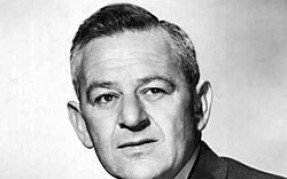
Portrait: Library of Congress, Prints and Photographs Division, photograph by Bernard Gotfryd, LC-DIG-gtfy-00154. United Nations, New York, between 1970 and 1973. Original file. No known copyright restrictions, per the Library of Congress. Existing 960-pixel derivative with the full Commons composition; further website resizing and thumbnail cropping.