Margaret Hilda Thatcher
Edit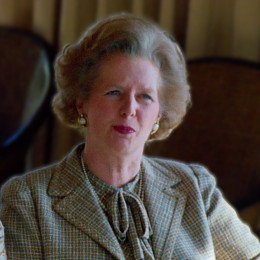 Enlarge Image
Margaret Thatcher was a British Conservative politician who served as prime minister from 1979 to 1990. Known as the Iron Lady, she became the first woman to hold the office and led her party to three successive general-election victories.
Explore Related Biographies
Selected for this profile

People Mentioned in This Biography
Early life, Oxford and professional training
Born Margaret Hilda Roberts on October 13, 1925, in Grantham, Lincolnshire, she grew up in a family that ran a grocery business. Her father, Alfred Roberts, was a Methodist lay preacher and local politician. The Churchill Archives Centre’s biography describes the influence of this religious and civic environment on her childhood.
She studied chemistry at Somerville College, Oxford, from 1943 to 1947, with the future Nobel laureate Dorothy Hodgkin among her teachers. At Oxford she also became president of the university’s Conservative association. After graduating, she worked as a research chemist before training as a barrister specializing in tax law. She married businessman Denis Thatcher in 1951; they had twins, Mark and Carol, in 1953.
From Finchley MP to Conservative leader
Thatcher entered the House of Commons as MP for Finchley in 1959. Junior ministerial work and opposition responsibilities preceded her appointment as education secretary in Edward Heath’s government in 1970. The British government’s historical profile traces her progression from Parliament to the Cabinet.
After the Conservatives lost power, she challenged Heath and won the party leadership in 1975. Four years later, the Conservatives defeated James Callaghan’s Labour government, and she became prime minister. Her time in opposition had helped develop the approach later called Thatcherism: greater reliance on markets and private ownership, combined with a forceful role for government in enforcing its political programme.
Economic policy and industrial conflict
Her governments pursued privatization, deregulation, changes to trade-union law and reductions in income-tax rates. The Housing Act 1980 expanded council tenants’ ability to buy their homes. These measures changed the relationship between the state, businesses and households. The official government account also notes the high unemployment of her early premiership, a central difficulty behind the political arguments of the period.
Industrial relations became especially confrontational during the miners’ strike of 1984–1985. Pit closures and the dispute’s defeat had lasting consequences for mining communities. London Museum’s collection of protest material documents resistance to her policies, including privatization and the later Community Charge, commonly called the poll tax. These records help explain why her reputation remained deeply divided despite repeated election victories.
Falklands War and international leadership
In 1982, after Argentina invaded the Falkland Islands, her government sent a military task force to the South Atlantic. Britain’s victory strengthened her political position ahead of the Conservatives’ 1983 election win. She also developed a close partnership with U.S. President Ronald Reagan while engaging with Soviet leader Mikhail Gorbachev. The Margaret Thatcher Foundation’s chronology of her career places these relationships within her Cold War diplomacy.
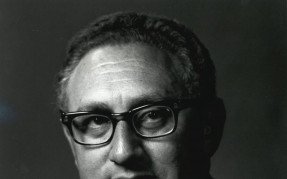
Her leadership continued to attract study after her departure from office. Former U.S. secretary of state Henry Kissinger included her among the six leaders examined in his 2022 book Leadership: Six Studies in World Strategy. That account represents Kissinger’s interpretation of her statecraft rather than a consensus assessment of her policies.
Resignation, memoirs and death
By 1990, disputes over Europe and opposition to the poll tax had weakened her position. Geoffrey Howe’s resignation and Michael Heseltine’s leadership challenge exposed divisions within the Conservative Party. She withdrew from the contest and left office in November 1990, succeeded by John Major.
Thatcher left the Commons in 1992 and became a life peer, Baroness Thatcher of Kesteven. Her memoirs included The Downing Street Years and The Path to Power. She died in London on April 8, 2013, aged 87, and received a ceremonial funeral at St Paul’s Cathedral. Her lasting historical importance rests on both the scale of the changes she pursued and the intensity of the disagreements they produced.
Portrait: Executive Office of the President, U.S. White House; individual photographer unidentified. Camp David, December 22, 1984, National Archives record 75853823. Original file and rights record. Public domain in the United States: federal government work. Existing Commons crop, resampling and background retouching, including work by Neveselbert, AlbanGeller and Hazhk; further website resizing and thumbnail cropping.