Boris Nikolayevich Yeltsin
Edit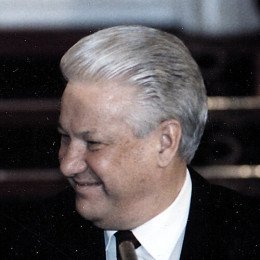 Enlarge Image
Boris Yeltsin was a Russian politician who served as president from 1991 to 1999. Elected while Russia was still a Soviet republic, he became the first president of the independent Russian Federation and a central figure in the Soviet Union’s collapse.
Explore Related Biographies
Selected for this profile
People Mentioned in This Biography
Early life, engineering and Communist Party career
Boris Nikolayevich Yeltsin was born on February 1, 1931, in Butka, a village in the Urals. He studied civil engineering at the Ural Polytechnic Institute and graduated in 1955. The Yeltsin Center’s biographical account traces his subsequent work in construction management in Sverdlovsk, now Yekaterinburg.
Professional management led to a career in the Communist Party apparatus. He became the Sverdlovsk region’s first party secretary in 1976 and moved into the national leadership in Moscow in 1985. That move placed him close to the centre of Gorbachev’s reform programme and the disputes it generated.
He lost the Moscow party leadership in 1987 after criticizing aspects of the reform process under Mikhail Gorbachev. Political demotion did not end his career. He returned through the new electoral institutions, winning a seat in the Soviet Congress of People’s Deputies in 1989 and becoming chairman of the Russian republic’s Supreme Soviet in 1990.
The 1991 election and the end of the Soviet Union
In June 1991, Yeltsin won the Russian republic’s first popular presidential election. His office was distinct from Gorbachev’s position as president of the Soviet Union. The two leaders represented competing centres of authority as debates over reform, national sovereignty and the future of the union intensified.
During the attempted hard-line coup in August 1991, Yeltsin called for resistance from the Russian parliament building and famously addressed supporters from a tank. The U.S. State Department’s history of the Soviet collapse explains how the coup’s failure weakened Gorbachev and increased Yeltsin’s influence. By the end of that year, the Soviet Union had broken apart and Russia was operating as an independent state.
Market reforms and economic upheaval
Yeltsin’s government moved rapidly away from central planning through price liberalization and privatization. The transition created opportunities for private enterprise but also severe hardship, including inflation and insecurity for many households. The concentration of valuable assets among a small group of business figures became an enduring feature of the period.
He won re-election in 1996, but his second term remained politically unstable. The August 1998 financial crisis brought a sharp currency decline and a default on domestic government debt. HISTORY’s account of his presidency places these shocks alongside repeated changes of prime minister and a growing struggle to maintain authority.
Constitutional confrontation and Chechnya
Yeltsin’s conflict with parliament escalated into armed confrontation in 1993. He ordered troops to fire on the parliament building in October, the same location from which he had opposed the 1991 coup. A new constitution subsequently gave the presidency extensive powers. This episode complicates descriptions of his presidency as an uncomplicated democratic transition.
In 1994, he ordered a military intervention in Chechnya. The resulting war caused extensive destruction and civilian suffering. Fighting ended in 1996 before a renewed conflict began in 1999, making Chechnya another major part of the contested record he left to his successor.
Relations with the United States
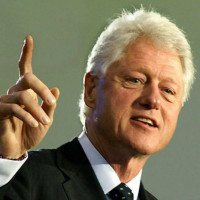
Yeltsin worked with U.S. presidents on arms control and post-Cold War security. His relationship with Bill Clinton combined cooperation with disagreement over NATO enlargement and other international issues. The University of Virginia Miller Center’s foreign-policy history describes U.S. support for Russia’s leadership and financial stabilization, together with assistance to secure nuclear materials and dismantle weapons in the former Soviet states.
Resignation, death and legacy
On December 31, 1999, Yeltsin unexpectedly resigned, making Prime Minister Vladimir Putin acting president. He retired from public office and died in Moscow on April 23, 2007, aged 76.
In CNN’s retrospective on his death, correspondent Jill Dougherty contrasted his stand against the 1991 coup with the 1993 attack on parliament. Those episodes capture the central tension in his legacy: the leader who helped end Soviet one-party rule also used force in struggles over Russia’s new political order.
Portrait: Susan Biddle, White House Photograph Office, George Bush Presidential Library / National Archives, record 186462. START II signing ceremony, Moscow, January 3, 1993. Original file and rights record. Public domain in the United States: federal government work. Existing Commons crop uploaded by Pieter Kuiper, downloaded as a 500-pixel derivative; further website resizing and thumbnail cropping.