Mikhail Borisovich Khodorkovsky
Edit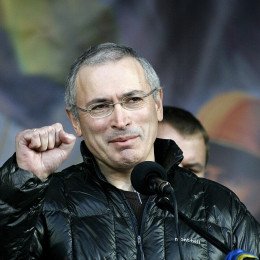 Enlarge Image
Mikhail Khodorkovsky is a Russian businessman, writer and opposition figure in exile. He became internationally known as the head of the Yukos oil company, spent more than ten years in prison after his 2003 arrest, and received a presidential pardon in December 2013. His later public work has focused on criticism of Russia’s political system and proposals for its future.
Explore Related Biographies
Selected for this profile
People Mentioned in This Biography
Education and early business ventures
Mikhail Borisovich Khodorkovsky was born on June 26, 1963. He studied at Moscow’s Mendeleev Institute of Chemical Technologies. His official biographical account describes an early career that moved from science and technical development into commerce as the Soviet economy began allowing new forms of enterprise.
In 1987, he established a youth centre for scientific and technical development. Import-export activity followed, and in 1989 he and business partners formed Bank Menatep after obtaining a banking licence. These ventures provided the foundation for his role in the large-scale transfer of state assets into private ownership during the following decade.
Yukos and Russia’s privatization era
In the mid-1990s, Khodorkovsky and his partners gained control of Yukos through the privatization programme associated with President Boris Yeltsin. These transactions formed part of the controversial loans-for-shares system, under which lenders to the government acquired major industrial assets. His own account of the Yukos acquisition presents the business rationale from his perspective.
Yukos became one of Russia’s leading oil producers. A Chatham House study of his release and political significance describes the company’s development into an integrated oil business and the later tax demands that preceded its bankruptcy. Major assets passed to the state-controlled company Rosneft. The history of Yukos therefore involves both the inequalities of 1990s privatization and the state’s subsequent reassertion of control.
Philanthropy was another part of his pre-arrest career. In 2001, he and other Yukos shareholders created the Open Russia Foundation. His official account of its programmes describes support for education, libraries, cultural projects and civil-society organizations.
Arrest, convictions and imprisonment
Authorities arrested Khodorkovsky on October 25, 2003. He was convicted in 2005 on charges including tax evasion. A second trial, conducted with former Yukos executive Platon Lebedev, ended in December 2010 with convictions relating to the misappropriation of oil and the laundering of proceeds. Khodorkovsky denied the charges.
The prosecutions became an international controversy over business, political opposition and the independence of Russian courts. He spent more than a decade in custody before Vladimir Putin pardoned him in December 2013. After his release, he travelled to Germany and subsequently continued his public activities abroad.
What the European human-rights ruling found
In January 2020, the European Court of Human Rights found multiple violations in the second trial. Its official judgment summary identifies restrictions on defence witnesses, expert evidence and confidential communication with lawyers, as well as an unforeseeable application of criminal law.
The court also rejected several complaints, including allegations about the trial judge’s independence and impartiality. These findings should be distinguished from a blanket ruling that every allegation against Khodorkovsky was fabricated, or from a domestic criminal acquittal. The judgment’s specific conclusions are more precise than either characterization.
Political activity after release
His return to public life brought a shift from managing an oil business to political advocacy. In an October 2014 account published by the Wilson Center, journalist Jill Dougherty examined his post-prison outlook and his criticism of Putin’s actions in Ukraine. Those were Khodorkovsky’s political judgments, rather than neutral descriptions of the Kremlin’s motives.
International engagement remained part of his work in 2026. The Parliamentary Assembly of the Council of Europe’s January 26 bureau record included him on its approved list for a new platform for dialogue with Russian democratic forces, subject at that stage to Assembly ratification.
Books and public arguments
He set out his interpretation of Russia’s political development in The Russia Conundrum, written with Martin Sixsmith and published in English in 2022. The book connects his experiences as a business insider and prisoner with arguments about Western policy and Russia’s future. It is an account from a prominent participant in those conflicts, whose perspective should be read alongside independent histories and court records.
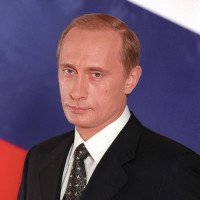
Portrait: VO Svoboda, Maidan, Kyiv, March 9, 2014. Original file and reviewed rights record. CC BY 3.0 Unported; Picasa licence reviewed by NickK on March 14, 2014. Full Commons composition, downloaded as a 960-pixel derivative; further website resizing and thumbnail cropping.