Vladimir Vladimirovich Putin
Edit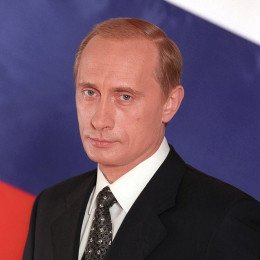 Enlarge Image
Vladimir Putin is a Russian politician and former intelligence officer who serves as president of Russia. He first assumed the acting presidency at the end of 1999, held the presidency from 2000 to 2008, and returned to the office in 2012 after four years as prime minister. His leadership has reshaped Russia’s political institutions and international relations.
Explore Related Biographies
Selected for this profile

People Mentioned in This Biography
Early life, law degree and intelligence service
Vladimir Vladimirovich Putin was born on October 7, 1952, in Leningrad, now Saint Petersburg. He graduated from Leningrad State University with a law degree in 1975 and entered the KGB, the Soviet security and intelligence service. His assignments included service in Dresden, East Germany.
After returning to Leningrad, he worked with Anatoly Sobchak, his former law professor and a leading city politician. He became responsible for the city administration’s external relations before moving to Moscow in 1996. The Council on Foreign Relations’ biographical profile follows this progression from intelligence work into municipal and national politics.
From the FSB to the presidency
President Boris Yeltsin appointed Putin director of the Federal Security Service, or FSB, in 1998 and prime minister in August 1999. When Yeltsin resigned on December 31, 1999, Putin became acting president. He then won the March 2000 presidential election and took office for a full term that May.
The unexpected handover was a defining moment in his rise. CNN’s 2014 profile, with reporting by correspondent Jill Dougherty, traced how a relatively little-known official became Yeltsin’s political successor and established himself in the Kremlin.
Presidential terms and centralization of power
Putin won another term in 2004. Under the constitutional rules then in place, he could not serve a third consecutive presidential term in 2008. Dmitry Medvedev became president, while Putin returned to the premiership. Putin resumed the presidency in 2012 and was re-elected in 2018.
A 2020 Congressional Research Service study describes the concentration of power around the presidency and the accompanying restrictions on independent political activity. It also explains how constitutional changes adopted in 2020 reset Putin’s eligibility for additional presidential terms. The change created the possibility of further service; it did not itself guarantee future election outcomes.
Election monitoring provides another perspective on this system. After the 2018 vote, OSCE observers reported efficient administration alongside an overly controlled environment, pressure on critical voices and a lack of genuine competition. His repeated electoral victories therefore need to be understood together with the conditions under which political opponents and independent media operated.
Business elites and political opposition
The relationship between the Kremlin and private business changed during Putin’s presidency. The prosecution of Yukos chief Mikhail Khodorkovsky became a prominent example. Khodorkovsky was arrested in 2003 and remained in prison until a presidential pardon in 2013, while Yukos was broken up and major assets passed to Rosneft. The Chatham House analysis of that case examines its political significance.
Crimea, the invasion of Ukraine and the ICC warrant
Russia annexed Crimea in 2014. In Resolution 68/262, the United Nations General Assembly reaffirmed Ukraine’s territorial integrity and stated that the March 2014 referendum could not provide a valid basis for changing Crimea’s status.
On February 24, 2022, Russia launched its full-scale invasion of Ukraine. The General Assembly’s March 2022 resolution condemned Russian aggression and demanded the withdrawal of Russian forces. The war became a defining event of Putin’s later presidency.
On March 17, 2023, the International Criminal Court issued an arrest warrant for Putin over alleged war crimes involving the unlawful deportation and transfer of children from occupied Ukrainian territory to Russia. A warrant represents allegations supported by the court’s required evidentiary threshold, rather than a conviction. The court’s 2026 annual report continued to list the warrant as outstanding.
Fifth term and current position
Putin began a fifth presidential term on May 7, 2024. Associated Press’s account of the inauguration described the six-year term against the background of restricted opposition and the Ukraine war. He remained Russia’s president in November 2026, as confirmed by AP’s contemporary reporting. His career spans the post-Soviet state’s development, the consolidation of presidential authority and an increasingly confrontational relationship with Western governments.
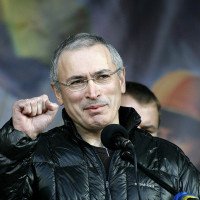
Portrait: Presidential Press and Information Office, Kremlin.ru; individual photographer unidentified. Historical official portrait, exact photograph date unspecified. Original file and rights record. CC BY 4.0 International. Existing Commons colour correction by Aavindraa, downloaded as a 960-pixel derivative; further website resizing and thumbnail cropping.