Wayne Keith Goss
Edit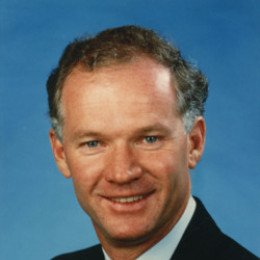 Enlarge Image
Wayne Goss was an Australian lawyer and Labor politician who served as premier of Queensland from December 1989 to February 1996. His election ended Labor’s 32 years in opposition and brought a period of institutional and social reform following the Fitzgerald Inquiry into corruption. He later worked in business, education and the arts.
Explore Related Biographies
Selected for this profile
People Mentioned in This Biography
Early life and legal education
Wayne Keith Goss was born on February 26, 1951, in Mundubbera, Queensland. His family moved to Inala in Brisbane, where he attended local primary and secondary schools. He studied law at the University of Queensland before building a career as a solicitor. The Queensland Parliament’s former-member register records his law and business qualifications.
His legal work included service with the Aboriginal Legal Service and involvement in the Caxton Legal Service. A University of Queensland account describes his progression from law studies to public-interest legal work and private practice. These activities preceded his entry into electoral politics and connected his professional career with community organizations.
Entry into Parliament and Labor leadership
Goss entered the Queensland Legislative Assembly as the member for Salisbury in 1983. After a redistribution, he represented Logan from 1986 until his retirement from Parliament in 1998. He held opposition responsibilities including justice before becoming Labor leader and leader of the opposition in March 1988.
His rise occurred while the Fitzgerald Inquiry was exposing corruption and examining policing and public administration. Labor won the December 2, 1989 state election, and Goss was sworn in as premier on December 7. His government also assigned him economic and trade development responsibilities and, initially, the arts portfolio.
Government reforms and political criticism
Goss’s government implemented reforms associated with the Fitzgerald Inquiry and changed electoral arrangements and public administration. Its programme included social reforms and participation in national economic reform, including energy and competition policy, as the university’s account of his career explains.
ABC’s retrospective describes changes to electoral rules, the lifting of street-march bans and protection of Fraser Island. It also records criticism: some observers considered his government socially cautious and too focused on economic outcomes. Disputes over railway services and a proposed eastern tollway in Brisbane complicated its relationship with voters. The reform record was substantial, but it did not remove the pressures of governing or disagreement within Labor.
Why his premiership ended in 1996
Labor returned to government in 1992 and again in 1995, with its parliamentary majority reduced to one seat at the latter election. A disputed result in Mundingburra led to a new election there in February 1996. The Liberal Party won the seat, and independent MP Liz Cunningham supported the Coalition.
Goss resigned as premier on February 19, 1996, and Rob Borbidge succeeded him. The sequence is set out in Premier Campbell Newman’s 2014 parliamentary condolence motion. Goss remained a member of Parliament before leaving at the 1998 election.
Kevin Rudd and the next generation of public officials
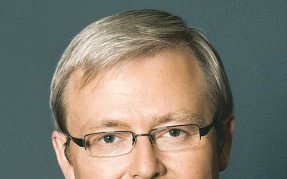
One member of Goss’s staff was Kevin Rudd, who served as his chief of staff and later became Australia’s prime minister. In ABC’s reporting after Goss’s death, Rudd paid tribute to his leadership and the changes he brought to Queensland. Those assessments reflect Rudd’s perspective as a former colleague and political successor.
Business, education, the arts and death
After parliamentary politics, Goss undertook consulting and company directorships. By 2007, the University of Queensland identified him as national chair of Deloitte Australia, chair of Ausenco and chair of the Queensland Art Gallery’s board of trustees. These were roles documented at that time, rather than current appointments.
The university also recognized his work through an honorary economics doctorate in December 2007. He contributed to business education as an adjunct professor and retained a substantial interest in the arts. These activities extended his public career beyond his years as premier.
Goss died at his Brisbane home on November 10, 2014, aged 63, following the recurrence of a brain tumour. A public memorial was held at the Gallery of Modern Art later that month. His career remains closely associated with Queensland’s transition out of the long National Party era and the challenges of translating institutional reform into lasting political support.
Portrait: Queensland State Archives, circa 1996, digital image 20763; individual photographer unspecified. Original file and rights record. CC BY 3.0 Unported. Existing Commons image uploaded by Kiwichris (2017), downloaded as a 250-pixel PNG derivative; no local alteration; further website conversion, resizing and thumbnail cropping.